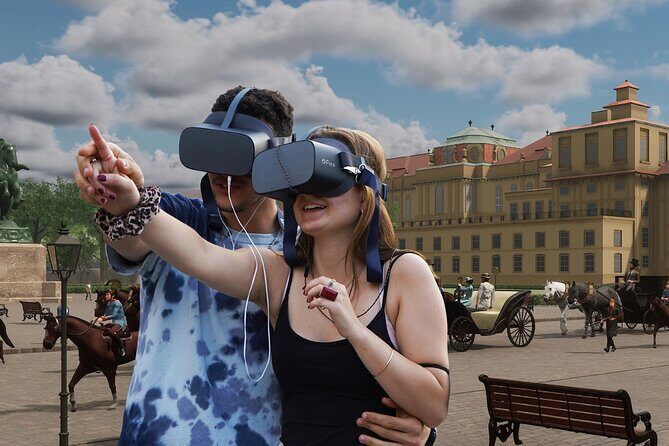
Vienna’s past comes with a VR headset. On this 2-hour Old Town stroll, you get 360-degree VR scenes at big sights, while an English audio guide talks you through Vienna’s changing eras. It’s like walking with a time machine strapped to your head—without losing the street-level charm.
I really like that the tour still works as a normal guided walk even if you’re brand-new to VR. You cover about 2–3 km at an easy pace, and the audio explains what you’re looking at as you go. One note to keep in mind: it’s not suitable for people with epilepsy, since the VR experience isn’t designed for everyone.
The route is straightforward: meet at Johannesgasse 21, then follow the story through St. Stephen’s Cathedral, Graben, Hofburg, and the Opera area before finishing at Stephansplatz.
In This Review
- Key things to know before you go
- What You’re Really Buying: A Vienna Story, Not Just VR
- Price and Value: How $47.17 Stacks Up for Two Hours
- Where the Tour Starts (and Why Johannesgasse 21 Works)
- The VR Stops You’ll See: St. Stephen’s to Stephansplatz
- St. Stephen’s Cathedral: The First Time-Layer Moment
- Graben: Walking the Story Through the City Center
- Hofburg: Power, Institutions, and the Vienna That Moved
- The Opera Area: A Cultural Turning Point
- Ending at Stephansplatz: Finish with Clarity
- Audio Guide + VR: How to Get the Most Out of the Experience
- Walking Practicalities: Pace, Distance, and Comfort
- Who This Tour Fits Best (and Who Should Skip It)
- Weather Matters: Plan for a Day That Lets You Walk
- Should You Book This Vienna Time-Travel Walk?
- FAQ
- How long is the Vienna Old Town walking tour with VR?
- Where does the tour start and where does it end?
- What language is the audio guide offered in?
- Which landmarks are included in the VR 360-degree scenes?
- How many people are in the group?
- Is this tour suitable for children or people with epilepsy?
- What happens if I need to cancel or the weather is bad?
Key things to know before you go
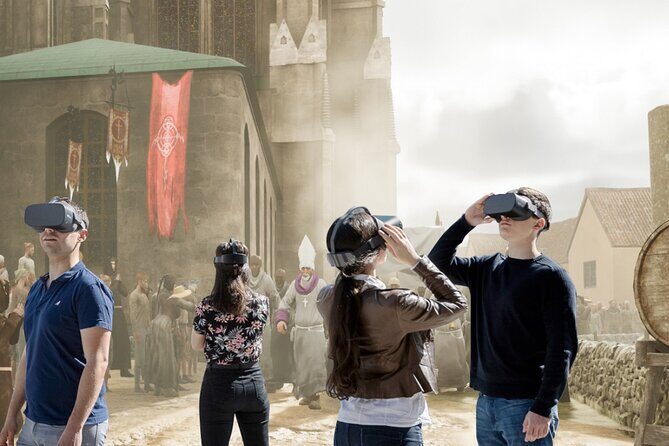
- Small group size (max seven) keeps the walk feeling personal and calm
- VR stops at five major landmarks: St. Stephen’s Cathedral, Graben, Hofburg, Opera, and Stephansplatz
- English audio guide guides you through Vienna’s evolution step by step
- Easy walking distance for a 2-hour experience (about 2–3 km total)
- First-time VR friendly based on how people describe the experience
What You’re Really Buying: A Vienna Story, Not Just VR
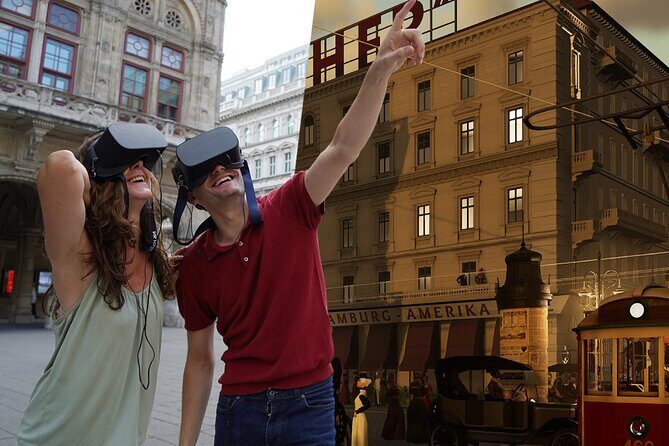
This tour is built around one idea: seeing Vienna as a layered city. Yes, you’re given a VR experience at key points. But the backbone is the audio guide, which turns stone and streets into a timeline of how Vienna evolved.
That balance is part of the value. The VR moments are the headline, yet the walk still makes sense without you treating the tech like the only attraction. In practice, you get a guided route through the Old Town with a clear “what am I seeing and why does it matter?” angle, which is how most people end up enjoying these places most.
Also, the group is capped at seven travelers. That matters more than it sounds. In a compact area like Vienna’s core, big groups can turn into slow bottlenecks. Here, you’re more likely to keep moving, hear the audio clearly, and feel like you’re on a guided stroll rather than a shuffle tour.
You can also read our reviews of more walking tours in Vienna


Price and Value: How $47.17 Stacks Up for Two Hours
At $47.17 per person, this isn’t the cheapest walking tour option in Vienna. The reason people tend to feel it’s worth it comes down to what’s included in the time.
You’re paying for:
- A 2-hour structured route through central landmarks
- An English audio guide focused on Vienna’s evolution
- VR 360-degree 3D scenes at several stops
- A small group (maximum seven) that helps the experience stay fluid
So you’re not just buying someone to point out buildings. You’re buying a narrated city timeline plus technology-driven “then and now” visuals at multiple points across the walk. For many visitors, that combination is what makes the experience feel different from a standard Old Town audio walk.
One more practical point: the average booking window is about 24 days in advance. That doesn’t mean it sells out instantly, but it does suggest it’s a popular format. If VR-style activities are your thing, I’d book ahead so you can pick a time that fits your schedule.
Where the Tour Starts (and Why Johannesgasse 21 Works)
You start at the tour office on Johannesgasse 21, 1010 Wien, and you end at Stephansplatz. This is a smart setup for a few reasons.
First, it places you right where Vienna’s sightseeing energy begins to intensify. You’re not trekking across town to get into the historic core. You’re already in the middle of it.
Second, finishing at Stephansplatz is convenient. It’s a natural anchor point for continuing your day—either by heading deeper into the old streets or by using public transport nearby. You end with your bearings, not with the “now what?” feeling.
The VR Stops You’ll See: St. Stephen’s to Stephansplatz
The walking route is tied to specific VR scene locations. Here’s what you can expect from each one, and what makes each stop worth your attention.
St. Stephen’s Cathedral: The First Time-Layer Moment
You’ll get one of the opening VR moments at St. Stephen’s Cathedral. Starting with such a recognizable landmark helps your brain lock onto the comparison fast—modern architecture on the street, then a historical view in 360-degree format.
This is a good first stop because it sets the tone. The audio guide isn’t just listing facts; it’s guiding you through “stages” of Vienna’s evolution. When you connect that narration to a place you can actually see in front of you, the story sticks better.
Practical tip: plan to look up as well as around. VR gives you the past perspective, but your real view of the cathedral is still doing the heavy lifting for scale.



Graben: Walking the Story Through the City Center
Next comes Graben. This stretch is where Vienna feels distinctly central—busy, elegant, and packed with architectural detail. With VR here, you get the sense that this area didn’t just look different; it functioned differently at different points in time.
The value at this stop is the “in-between” quality. You’re not only visiting monuments; you’re moving through the streets where urban life played out. The audio helps you read the streets as part of the timeline instead of treating them like a corridor between sights.
Hofburg: Power, Institutions, and the Vienna That Moved
The VR scene at Hofburg brings you into a part of Vienna strongly tied to rule, institutions, and long-term continuity. Even if you don’t know the full historical background before the walk, the structure of the experience gives you a framework: you’re shown how Vienna’s evolution shows up in major power centers.
This stop tends to work especially well for visitors who like context. You’re not only seeing a place; you’re learning what kind of city these buildings belonged to, and why that mattered.
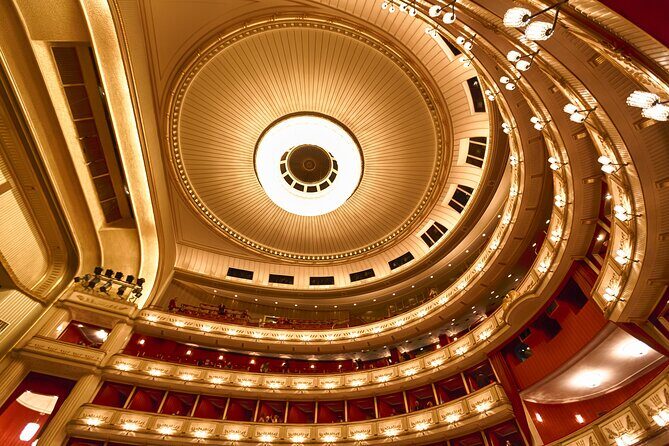
The Opera Area: A Cultural Turning Point
Then you’ll hit the VR scene at the Opera stop. This is where Vienna’s identity as a cultural capital becomes very obvious, even from street level.
VR here helps connect the cultural side of the city to the broader “evolution” narrative your audio guide is telling. Instead of history feeling like separate chapters, you get it as a continuing thread: governance, city life, and arts all braided together.
Ending at Stephansplatz: Finish with Clarity
Your tour finishes at Stephansplatz. I like endings like this because you’re done right at a major hub. You can keep exploring nearby streets while your timeline is still fresh in your head.
Ending at a well-known square also helps you avoid that common city-walk problem: wandering at the end with no natural plan. Here, Stephansplatz gives you a clean stop point, so your afternoon doesn’t unravel.
Audio Guide + VR: How to Get the Most Out of the Experience
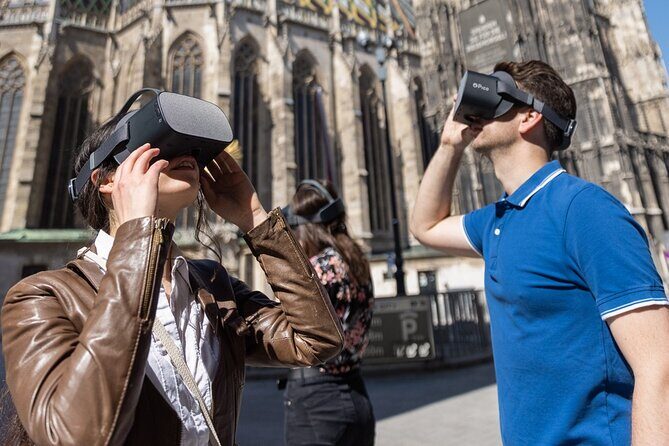
A lot of people choose this kind of tour for the VR. But the real win is how the audio guide handles the pacing and meaning behind what you’re seeing.
The audio focuses on different stages of Vienna’s evolution, which turns each landmark into a chapter. That’s why this tour works even for people who are new to VR. The VR is a tool for perspective; the audio is the guiding hand.
Here are a few ways you can make it land better:
- Listen for the “why” behind each stop, not just the dates
- Use the street view to anchor what the VR is showing
- Don’t rush. With VR scenes, quick movement can blur the connection between past and present
Also, because the group is capped at seven, you’re less likely to feel lost or delayed. That matters when a route relies on “arrive, look, listen, move on.”
Walking Practicalities: Pace, Distance, and Comfort
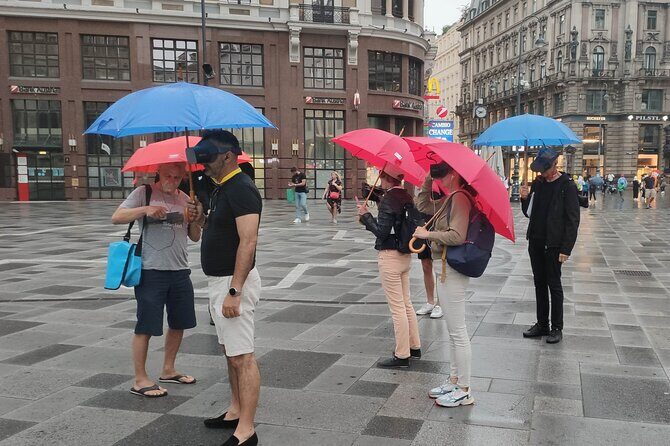
The tour runs for about two hours and covers roughly 2–3 km walking total. That’s an important detail. You should treat this as an easy to moderate stroll through central Vienna, not a long endurance outing.
I’d plan for:
- Comfortable shoes (Old Town streets can be uneven)
- A calm pace so you don’t miss the audio beats and VR setup moments
Because it’s in the core, you’ll also likely pass well-known spots at a good tempo. That keeps the experience from turning into a “one landmark, ten minutes of waiting” kind of day.
Who This Tour Fits Best (and Who Should Skip It)
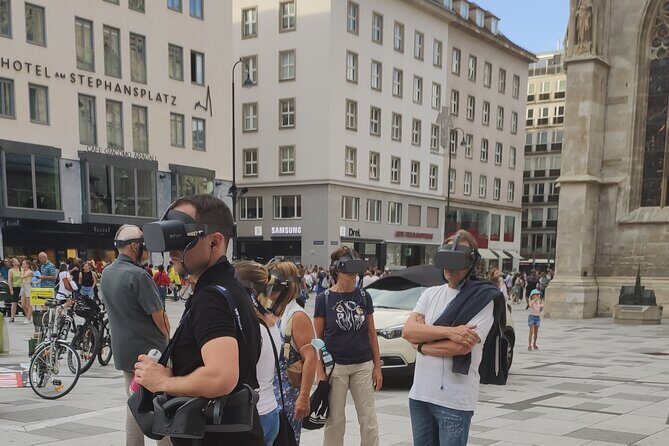
This experience is listed as suitable for most travelers, with a couple of clear exceptions.
It is not suitable for people with epilepsy, and it is not suitable for children below 10. Those restrictions are a big deal, so take them seriously. VR can involve visual effects that aren’t compatible with everyone, and you don’t want to guess.
For everyone else, it’s a strong fit if:
- You like guided context and a clear route through the center
- You want the Old Town experience with a modern twist
- You’re curious about VR 360-degree storytelling, but still want a real walk
And if you’re the type who gets bored by tours that only recite names, this format may be refreshing. The audio narrative + visual “then and now” combo helps you keep interest without turning it into a classroom.
Weather Matters: Plan for a Day That Lets You Walk
This tour requires good weather. If weather forces a cancellation, you’ll be offered another date or a full refund.
That matters because this isn’t an all-indoor experience. You’ll be walking between central landmarks, so rain or miserable conditions can change how enjoyable it feels. If your trip has only one flexible day, pick it thoughtfully.
Should You Book This Vienna Time-Travel Walk?
If you’re heading to Vienna and you want more than a look at pretty buildings, I’d book this. The reason is simple: you get an Old Town walk with English audio that explains Vienna’s evolution, plus VR scenes at multiple landmark stops. That combination is what makes the experience feel more than a standard tour.
Book it especially if:
- VR storytelling is on your travel “must try” list
- You want a small group format (max seven)
- You’d like a structured route that ends at a major hub
Skip it if:
- You or someone in your group has epilepsy
- You’re traveling with children under 10
One final nudge: with an average booking window of around 24 days, it’s smart to lock in your preferred time sooner rather than later—particularly if you want a slot that matches your sightseeing rhythm.
FAQ
How long is the Vienna Old Town walking tour with VR?
It takes about 2 hours.
Where does the tour start and where does it end?
You meet at Johannesgasse 21, 1010 Wien, Austria and the tour finishes at Stephansplatz, 1010 Wien, Austria.
What language is the audio guide offered in?
The experience is offered in English.
Which landmarks are included in the VR 360-degree scenes?
The VR scenes are at St. Stephen’s Cathedral, Graben, Hofburg, Opera, and the tour finishes at Stephansplatz.
How many people are in the group?
The tour caps at a maximum of 7 travelers.
Is this tour suitable for children or people with epilepsy?
It is not suitable for children below 10. It is also not suitable for people with epilepsy.
What happens if I need to cancel or the weather is bad?
You can cancel for a full refund if you cancel up to 24 hours in advance. The tour requires good weather, and if it’s canceled due to poor weather, you’ll be offered a different date or a full refund.