REVIEW · VIENNA
Vienna: Private Walking Tour of the Central Cemetery
Book on GetYourGuide →Operated by Christian Pacic · Bookable on GetYourGuide
Death has a beautiful address in Vienna. This private guided tour of the Vienna Central Cemetery turns a serious place into a readable map of how Austria remembers its losses. I especially like the way the route is built around major monuments and clear context, including memorials tied to the Ringtheater fire in 1881 and the Battle of Vienna in 1945. I also like the pace: two hours that feel focused, not rushed, so you can actually take in the details.
One thing to consider: the live guide is German, so if you’re not comfortable with the language, this may feel harder to follow even with a good walk and interesting stops.
In This Review
- Key Highlights You’ll Feel During the Walk
- Vienna’s Central Cemetery: Where Vienna Stores Its Memories
- Finding the 2nd Gate and Settling In for a 2-Hour Walk
- The Art Nouveau Cemetery Church: The Structure That Organizes Everything
- Monumental Tombs, Not Just Names: What You’ll Notice on the Route
- The Ringtheater Fire (1881) and the Battle of Vienna (1945)
- The Forest Cemetery: Seeing Modern Burial Arrive
- Price and Group Value: What You’re Really Paying For
- Who This Private Tour Fits Best
- Should You Book This Vienna Central Cemetery Tour?
- FAQ
- How long is the Vienna Central Cemetery private walking tour?
- What’s the meeting point for the tour?
- Is the tour private, and what group size does it allow?
- What language is the live guide?
- Is the cemetery church included?
- Is there an extra fee charged on site?
- Is the tour wheelchair accessible?
Key Highlights You’ll Feel During the Walk

- A private, no-rush route through Vienna’s Central Cemetery in about 2 hours
- Europe’s second-largest cemetery made understandable through a guided storyline
- The art nouveau cemetery church—a structure that visually and mentally organizes the grounds
- Memorials tied to specific tragedies, including 1881 and 1945
- A look at modern burial at the forest cemetery, so the place isn’t frozen in the past
- State-certified Austrian guidance plus free church admission as part of the tour
Vienna’s Central Cemetery: Where Vienna Stores Its Memories
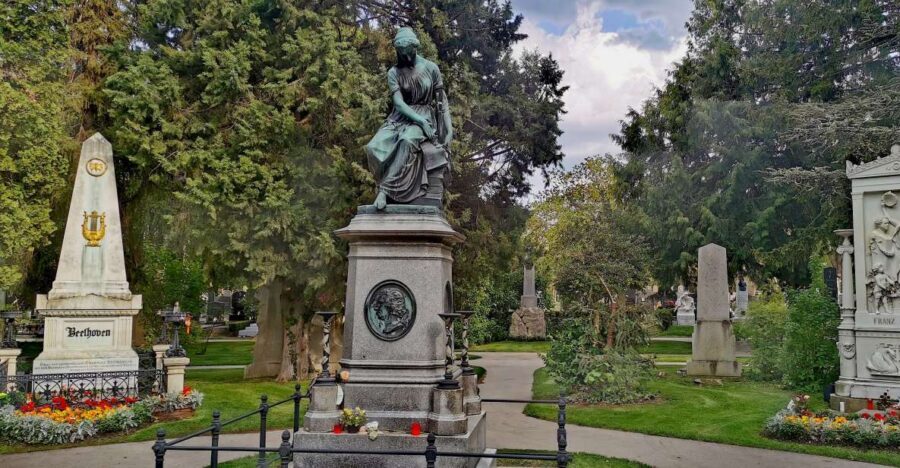
Vienna doesn’t just have grand palaces. It also has a cemetery that functions like a city archive—written in stone, symbolism, and architectural statements. The Central Cemetery is Vienna’s most significant burial place, and today it’s considered one of the city’s most beautiful cemeteries, even though it began with criticism. That shift matters, because it tells you something about culture: how public space, mourning, and art can change over time.
What I like most is that this tour doesn’t treat the cemetery as a spooky checkbox. It frames it as a place where wealth, reputation, and family history are recorded beyond someone’s lifetime—yet down below, everyone becomes equal in death. You’ll see that contrast play out in the scale of monuments: some graves are quiet and personal, while others look like buildings meant to last.
And because the cemetery covers a lot of ground, a guided visit is the difference between wandering and understanding. You’ll walk with a plan that helps you notice what’s actually important—names, materials, and the stories the memorials are pointing you toward.
You can also read our reviews of more walking tours in Vienna


Finding the 2nd Gate and Settling In for a 2-Hour Walk
You’ll meet at the 2nd gate, and once you enter, the guide will be on the right by the water hydrant. That’s a small detail, but it saves you time. Cemeteries can be disorienting at first, and you don’t want the first ten minutes to be a maze hunt.
This is a private group tour for up to 10 people, and it runs about 2 hours. That time window is ideal for most visitors because the Central Cemetery is too large for a casual self-guided loop. With a guide, you get a meaningful selection of stops instead of trying to see everything and missing what each place is really saying.
Also pay attention to practical comfort. The tour duration is short enough that you can plan it without rearranging your day, but cemeteries still involve walking on paths and spending time looking carefully at tomb details. Wear shoes you’d be happy to stand and read in.
Finally, it’s worth knowing you’ll hear the tour in German. The tour listing doesn’t say there are headsets for all group sizes, but it does mention headsets for groups from 15. For a private group, you likely won’t need them, yet the point stands: communication clarity is built in.
The Art Nouveau Cemetery Church: The Structure That Organizes Everything
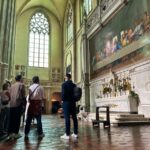
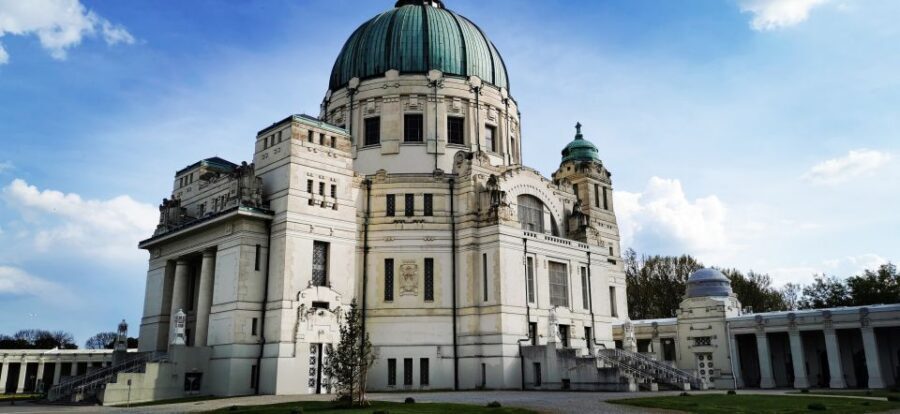
At a dominant position—almost in the center—you’ll find the cemetery church, and it’s the kind of building that changes how the whole site feels. The church is Viennese Art Nouveau, and during your guided visit you’ll learn about its architectural history. That is an excellent way to start making sense of the grounds, because architecture here isn’t just decoration. It’s the organizing principle.
Here’s the practical value: when a cemetery has a major focal structure, you can orient yourself both physically and emotionally. From there, tomb placement and monument size start to feel purposeful rather than random. You’ll understand why certain areas feel more ceremonial and why the church feels like a center of gravity for the visitor’s attention.
If you like buildings even a little—especially turn-of-the-century design—this stop is where the tour goes beyond names on plaques. The church gives you a lens for interpreting the cemetery’s art and civic identity. It’s also one of the places where your guide can connect the dots between aesthetics and meaning.
Good to know: the tour includes free admission to the cemetery church, so you’re not trying to fit in ticket steps while your group is waiting.
Monumental Tombs, Not Just Names: What You’ll Notice on the Route
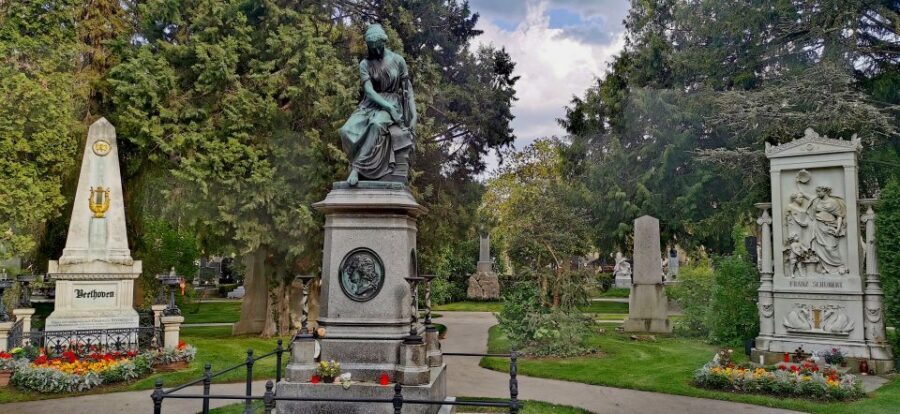
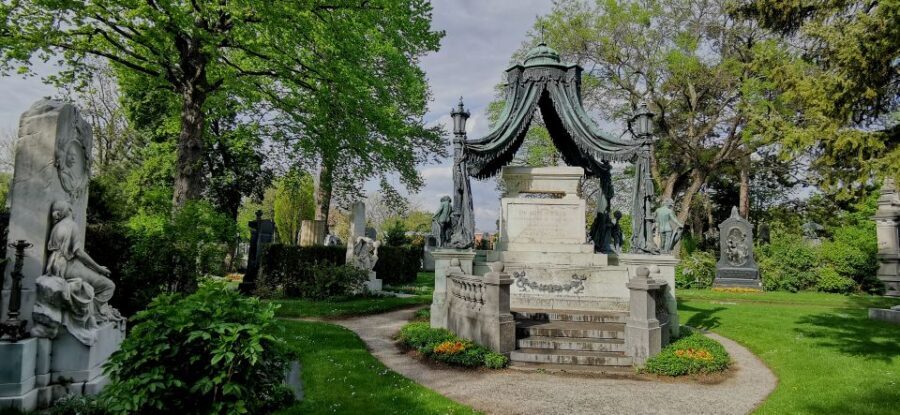
This tour is designed around the idea that the Central Cemetery is less about one famous person and more about the city’s pattern of remembrance. As you walk, you’ll see monumental tombs that record splendor and glory, alongside memorials for lives marked by tragedy.
It helps to go in with eyes that look for patterns. Even in a cemetery, the materials and shapes are language:
- Larger, more sculptural graves often signal status, influence, or family prominence.
- Crosses, allegorical figures, and inscriptions usually point you to what a community wanted to preserve.
Your guide’s job is to keep those clues from becoming dead symbols. You’ll hear stories that connect the monuments to real events and specific people, which makes your reading of the tombs faster and more confident. Instead of standing there thinking, What am I supposed to look at?, you’ll have a framework.
The cemetery also holds the reminder that it’s not one era. It’s past and present at once. You’ll see memorials that feel historic and solemn, and then you’ll start moving toward sections that show modern burial styles. That progression is part of why a guided visit works so well: you get a narrative arc, not just a pile of sights.
The Ringtheater Fire (1881) and the Battle of Vienna (1945)
Two kinds of memorials you’ll encounter are tied to specific, painful moments in Vienna’s history: the graves for victims of the Ringtheater fire in 1881, and the graves for Soviet soldiers who died in the Battle of Vienna in 1945.
These stops aren’t just about learning dates. They show how a cemetery becomes a public record of trauma—how cities decide what to remember, and how memory gets carved into place. With the guide’s storytelling, you’ll likely pick up how the cemetery functions as a civic memory tool: it holds individual loss, but it also reflects collective history.
This is also where the tour’s tone matters. You’re not in an entertainment zone. You’re in a space for reflection, and the stories make that clear. Still, that doesn’t mean it’s unbearably heavy the whole time. In the experience’s own spirit, the guide brings a distinctly Viennese sense of humor—what locals often call Wiener Schmäh—so you get balance: respectful, but not lifeless.
If you’re the type of traveler who likes history that connects to actual physical places, this section is a highlight. If you dislike memorial settings, you may want to mentally prepare for it. The good news is that your guide will keep your focus on understanding rather than shock.
You can also read our reviews of more private tours in Vienna






The Forest Cemetery: Seeing Modern Burial Arrive
At the end of the private tour, you’ll see the forest cemetery. This matters because it signals change: burial practices and public attitudes don’t stay still. Where some of the Central Cemetery can feel monumental and traditional, the forest cemetery points toward a more modern approach—one that often feels quieter and closer to nature.
From a traveler’s perspective, it’s a smart way to end. After the heavier storytelling and the older monuments, you get a softer landing. It also changes your takeaway. Instead of thinking Vienna’s cemetery culture is only about grandeur or old tragedies, you leave understanding that it continues evolving.
This final area gives you a visual contrast that you can’t easily get from photos. Walking there with a guide helps you see why the cemetery is not just a museum of the dead, but a living part of today’s society.
Price and Group Value: What You’re Really Paying For
The price is $217 per group, up to 10 people, and the tour lasts 2 hours. That group pricing is the key to value. If you’re traveling with friends or extended family and can fill the group, the cost per person drops quickly. Even if it’s just a small group, the private format means you’re not sharing your questions, pauses, and attention with a crowd.
For two people, the cost per person is higher than a solo ticket tour, so I’d frame this as a “pay more for clarity” choice. You’re paying for a state-certified Austrian guide and a route that’s built for understanding. In a cemetery this large, that guidance has real payoff: it turns a huge site into a readable experience.
Two other value boosters:
- Free admission to the cemetery church is included, which saves you a hassle and a cost you’d otherwise have to handle.
- The guide is live, and the tour is handled in German—which matters if you want accurate narration instead of a vague audio loop.
One more practical note for budgeting: from January 1, 2024, there’s a solidarity contribution of €3 per person charged on site and before the tour. Also, only accredited tour guides are allowed to offer commercial cemetery tours starting January 1, 2024. That’s good for you as a traveler: it reduces the chance you’ll get an unqualified guide.
Who This Private Tour Fits Best
This tour is a strong match if you want history you can see, not just read. It’s also a good fit if you like architecture, because the art nouveau cemetery church adds a design story on top of the memorial story.
You’ll enjoy it most if you’re:
- Traveling with a small group and want a private pace
- Curious about how Vienna remembers major events like the 1881 Ringtheater fire and 1945 Battle of Vienna
- Interested in a cemetery as cultural space, not only as a solemn stop
It’s less ideal if you need a light, quick sightseeing hit with no reflection. This is a “death in Vienna” experience, and even with a sense of humor, it’s still a place built for remembrance. If that mood doesn’t work for you, you might prefer a different kind of guided walk.
The German-language aspect is the other make-or-break detail. If you don’t speak German, you might still enjoy the visuals, but the story portion—the part that makes the tour worth your time—will be limited.
Should You Book This Vienna Central Cemetery Tour?
I’d book it if you want your visit to feel guided, respectful, and actually informative, especially for the mix of memorial history and Art Nouveau architecture. The private format is what makes it practical: you get a clear route and a story thread rather than trying to navigate a huge cemetery on your own.
I would not book it if German narration will be a struggle, or if you’re not in the headspace for memorial settings. In that case, you may still find the cemetery meaningful, but the tour’s main strengths—context and storytelling—won’t land as well.
FAQ
How long is the Vienna Central Cemetery private walking tour?
The tour lasts about 2 hours.
What’s the meeting point for the tour?
Meet at the 2nd gate. After the entrance, the guide is on the right at the water hydrant.
Is the tour private, and what group size does it allow?
It’s a private group tour, priced per group up to 10 people.
What language is the live guide?
The live tour guide speaks German.
Is the cemetery church included?
Yes. The tour includes free admission to the cemetery church, and you’ll visit it with guided explanation.
Is there an extra fee charged on site?
Yes. From January 1, 2024, a solidarity contribution of €3 per person is charged on site and before the tour.
Is the tour wheelchair accessible?
Yes, it’s listed as wheelchair accessible.