REVIEW · VIENNA
Vienna: Essential History Walking Tour
Book on GetYourGuide →Operated by Viennatour Herbert Stojaspal · Bookable on GetYourGuide
Vienna’s story is everywhere, if you know where to look. This 2-hour walking tour strings together the big ideas and the small details, from Roman traces to Habsburg power and the city’s WWII scars. I especially like how it stays focused in a tight central loop, so you learn a lot without feeling like you’re constantly checking directions.
Two things I really value: you get clear, human explanations tied to real buildings, and the guide work (often Herbert, plus other English-speaking guides) is lively, with dry humour and practical suggestions for what to see next. One drawback to plan for: it runs in all weather and it is not designed for people with mobility impairments, plus you can’t bring large bags.
In This Review
- Quick take on this Vienna history walk
- Why this 2-hour walk works for first-time Vienna
- Meeting at Michaelerplatz: finding the tour start without stress
- From Roman Vienna to the Michaelerplatz excavations
- Hofburg Palace and Heldenplatz: power, space, and what hides behind facades
- Imperial Treasury and the Austrian National Library state room
- St. Michael’s Church: Habsburg weddings and the surprising human side
- Albertina, and why Vienna keeps art and memory close
- State Opera, Hotel Sacher, and the story behind what replaces what
- Neuer Markt and the Providentia Fountain anecdotes
- Imperial Crypt burial rituals: how dynasties wanted to be remembered
- St. Stephen’s Cathedral: wartime damage and why school facts can be incomplete
- Guides, small groups, and why the stories stick
- Price and value: what you’re really buying for $34
- Weather, comfort rules, and who this tour fits best
- Should you book this Vienna essential history tour?
- FAQ
- Is the tour actually only two hours?
- What is included in the price?
- Where do I meet the group?
- Can I bring luggage or large bags?
- Can I record video or audio during the tour?
- Will St. Michael’s Church be open on Sundays?
Quick take on this Vienna history walk
- Small-group feel in a very central area, so questions don’t get lost.
- Herbert-style storytelling, often with dry humour and lots of helpful context.
- Imperial Vienna highlights packed into a short time: Hofburg grounds, Heldenplatz, and the Imperial Crypt.
- Art and war remembered, including the Albertina and the Monument Against War and Fascism.
- Iconic stops with meaning, from St. Michael’s to St. Stephen’s Cathedral, not just photo ops.
Why this 2-hour walk works for first-time Vienna
Vienna can feel like one long museum, and that is a good problem. The catch is that without a guide’s thread, you might see impressive facades and still miss what made them matter. This tour is built to give you that thread fast, by linking buildings to rulers, rituals, and turning points.
What makes it a strong start is the pacing. You cover major ground on foot, but the stops are chosen to explain why Vienna looks the way it does. By the time you reach the final highlight at St. Stephen’s Cathedral, you’ll understand the logic behind the city’s layout—especially the Imperial district that dominates the center.
You can also read our reviews of more walking tours in Vienna
Meeting at Michaelerplatz: finding the tour start without stress
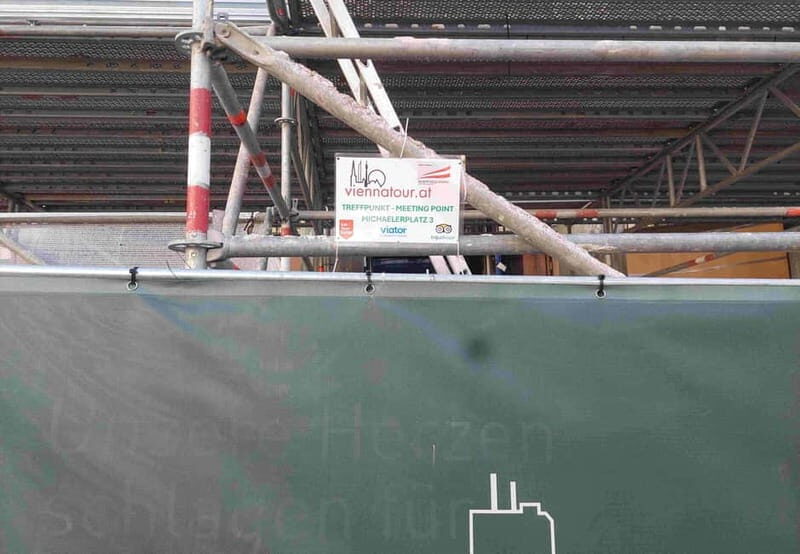
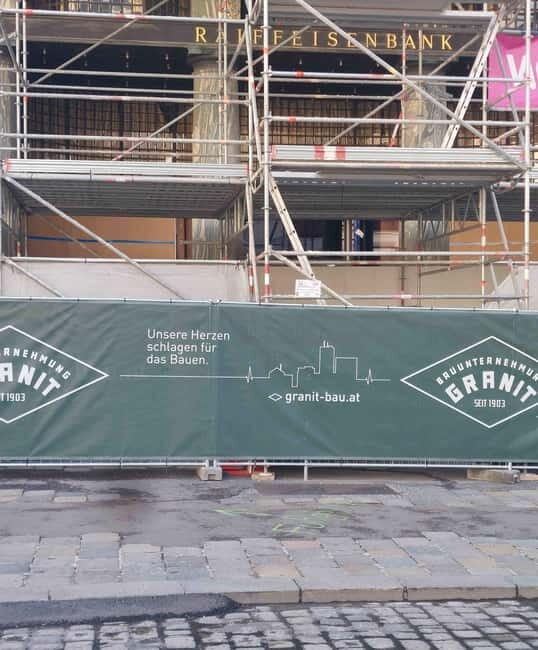
You meet at Michaelerplatz 3, in front of Loos Haus, near the Herrengasse metro stop (U3). The building has the name Raiffeisenbank on the facade, and it sits between the streets Kohlmarkt and Herrengasse—handy when you’re trying to locate the group quickly.
This kind of meeting point matters because it sets you up for an efficient walk. You start in an area that’s already central to Vienna’s story, so you don’t waste time commuting into the “real” old town. Also, the tour is designed for a small group, which tends to keep the pace comfortable and the conversation flowing.
Practical note: large bags and luggage aren’t allowed, and video/audio recording isn’t permitted. Bring only what you need for a short walk, and keep your phone for photos.
From Roman Vienna to the Michaelerplatz excavations
The tour begins by grounding you in the earliest layer: Roman Vienna, and the question of why a castle was built in this spot. You don’t just hear dates; you get the idea that Vienna’s later power grew out of earlier strategic geography.
Then you move into the Michaelerplatz excavations, where the past stops being abstract. Seeing excavation areas while someone explains how the city evolved helps you understand why the Hofburg area feels like a “centre of gravity.” It becomes less about a single palace and more about a long-running seat of authority.
This is also where the guide’s style really helps. Even when you’re standing still, you’ll get prompted to look at surroundings differently—like noticing how street space and building placement connect to what ruled here.
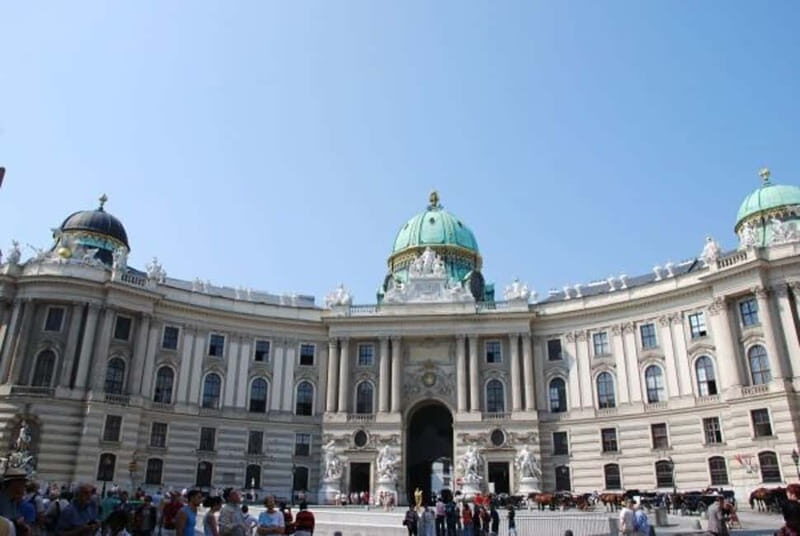
Hofburg Palace and Heldenplatz: power, space, and what hides behind facades
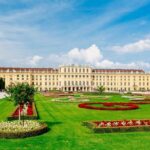
Next comes the Hofburg Palace and the logic behind its enormous footprint. The Hofburg grounds cover 555,000 m², and the tour uses that scale to explain why the empire didn’t just have rulers—it had an ecosystem of institutions.
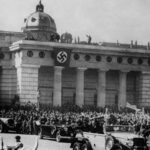
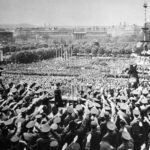
From there you head to Heldenplatz (Heroes’ Square). The guide highlights the size of the square and then pulls back the curtain on what lies behind the facades. That is the key move on this tour: you learn to read architecture like a map of politics and ambition.
I like this part because it teaches you to connect names with places. You hear about the most important rulers in the city, and suddenly the imperial buildings stop looking like sets. They become backdrops for decisions, ceremonies, and public displays meant to project control.
Imperial Treasury and the Austrian National Library state room
Once you’re in the imperial mood, the tour turns to the material side of sovereignty. You get a visit focused on the Imperial Treasury, and the point isn’t just that it exists—it’s why people traveled for it and what it represented.
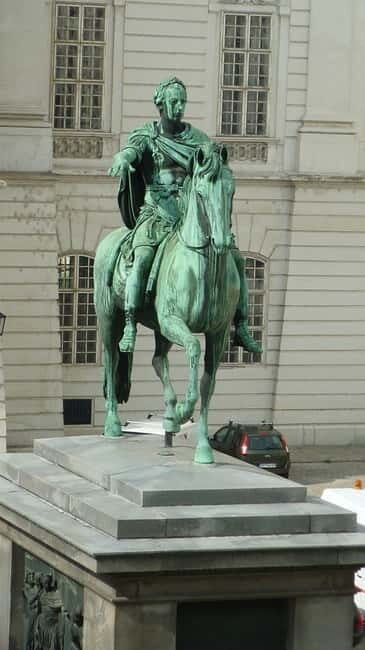
After that, you pass the Austrian National Library and its state room. This stop is especially useful for first-time visitors because it teaches you how to decode symbolism. You’ll learn what the roof symbol means and why the square is named after Emperor Joseph II—small details that make the building feel less like decoration and more like coded messaging.
Even if you don’t plan to go inside every museum right away, this kind of “what to look for” lesson pays off. It helps you return later with better questions, and it makes your self-guided wandering more satisfying.
You can also read our reviews of more historical tours in Vienna



St. Michael’s Church: Habsburg weddings and the surprising human side
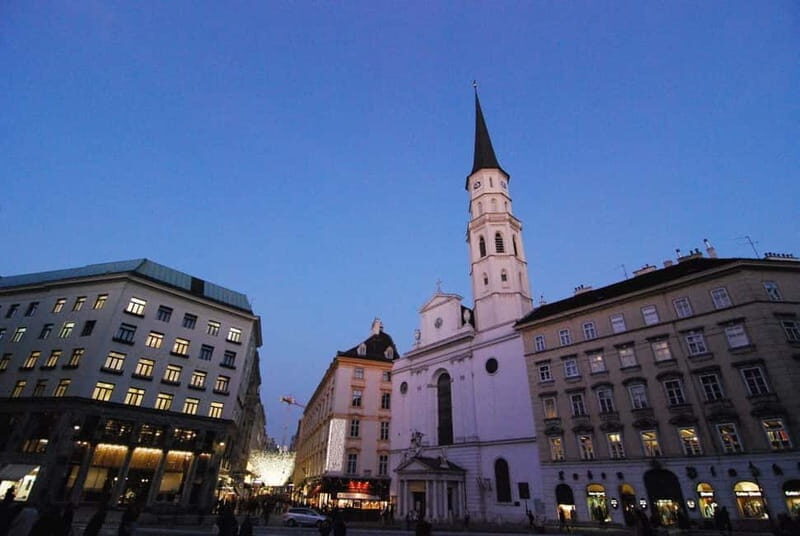
The tour then pivots to ceremony, tradition, and how dynasties made their public image. You visit the church where all Habsburg weddings were held—St. Michael’s. It’s also described as Vienna’s third oldest church, with a mix of three architectural styles, which gives you a good reason to pause and study the structure instead of rushing to the next landmark.
One very practical consideration: this church is closed on Sundays and public holidays. So if your schedule falls on a day when it’s closed, don’t assume you’ll see everything the tour mentions in the same way.
You also get a specific anecdote about wedding customs, including why the groom was not even present at some weddings. That detail is exactly the kind of story that turns “royal history” into real life. It gives you a window into how power worked through ritual, paperwork, and public expectation rather than simple romance.
Albertina, and why Vienna keeps art and memory close
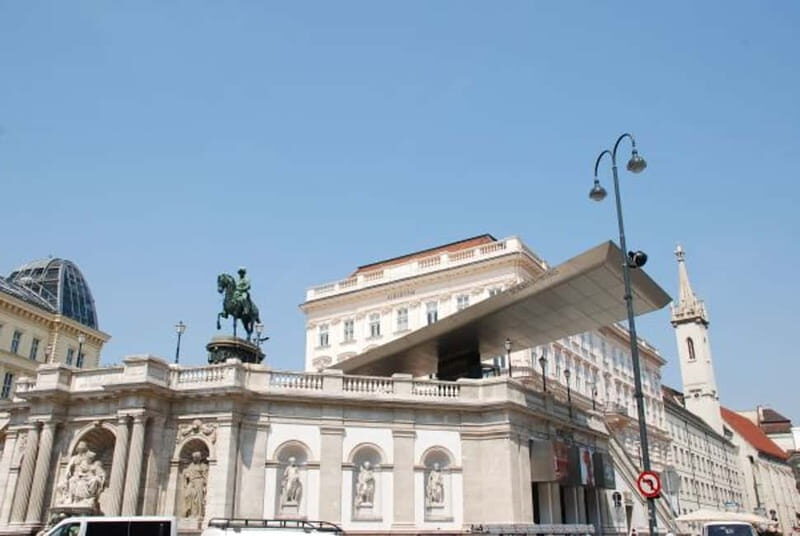
Next is the Albertina, known here for housing the largest graphical collection in the world. Even if you don’t go inside, you’ll walk away with a clearer sense of what makes the Albertina important in a city that treats culture like statecraft.
Then comes a hard pivot: the Monument Against War and Fascism. The tour uses this spot to confront the horrors of the Second World War, placing art and architecture next to remembrance. That contrast matters in Vienna because so much of the city’s beauty came with political consequences.
If you prefer your history in a straight line, this shift can feel intense. But it’s also honest. You don’t finish the walk thinking Vienna only did grand things—you understand that the same city carrying imperial splendour also experienced catastrophe.
State Opera, Hotel Sacher, and the story behind what replaces what
You stop at the State Opera to connect Vienna’s cultural life to its changing urban fabric. The guide explains why the Hotel Sacher now stands in place of the Carinthian Gate Theatre. That’s a great example of how cities evolve: a famous site isn’t just a location—it’s a layer of history that gets repurposed.
This is one of the more “Vienna-specific” lessons on the tour. You’ll start seeing replacement and redevelopment as part of the city’s storyline, not as random change. And once you notice that, you’ll spot it everywhere in central Vienna.
Neuer Markt and the Providentia Fountain anecdotes
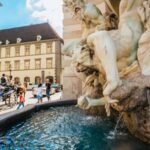
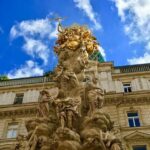
At Neuer Markt, the tour includes the Providentia Fountain, with anecdotes that give personality to a place people often rush past. This isn’t just about the fountain being pretty. It’s about how public art and street corners can hold meaning, jokes, or reminders tied to the city’s past.
I like stops like this because they add texture. Imperial buildings can dominate your mind, but a fountain anecdote helps you remember the city as a lived space, not only a royal stage.
Imperial Crypt burial rituals: how dynasties wanted to be remembered
The tour then leads to the Imperial Crypt, where you learn about Habsburg burial ritual. You get the sense that funerary practice was part of the dynasty’s long-term public strategy—how they wished to be remembered, and how they structured continuity even after death.
This stop is also valuable because it connects the earlier ceremony theme (weddings, symbolism, public image) to the end-of-life theme. It’s still “ritual,” but now you see the full arc of how power manages identity.
If you feel a little uncomfortable with how formal it all is, that reaction is normal. That discomfort is part of what makes the tour effective: it doesn’t sanitize history.
St. Stephen’s Cathedral: wartime damage and why school facts can be incomplete
The walking tour ends at St. Stephen’s Cathedral, the landmark of Vienna. You hear about its partial destruction during the Second World War, which adds a sobering layer to a building most people associate with pride and tradition.
Then the tour tackles something subtle: why not everything taught in school is correct. That doesn’t mean you’ll leave with a single new trivia answer. It means you’ll start thinking like a historian—questioning, checking context, and recognizing that even well-known facts can be simplified.
This is also a strong ending point because you finish in a place where you can keep exploring on your own. If you still have energy after the 2 hours, you’re already positioned at one of the best “branches” for walking in every direction.
Guides, small groups, and why the stories stick
The guide experience is a big part of what you’re paying for. In the feedback tied to this tour style, guides like Herbert are praised for entertainment and dry humour, while others such as Dorothy or Wolfgang are also noted for clear explanations and answering questions.
One of my favorite patterns from this kind of guided approach is visual support. In at least some cases, the guide uses an iPad with photos to show how places looked in earlier times or after major events like World War II. That transforms a stop from “I stood here” into “I can see what changed.”
The group size is described as small, which matters because it gives you room to ask follow-up questions. If you’re the type who likes to learn how the pieces connect—rulers, architecture, and events—this setup tends to work well.
Price and value: what you’re really buying for $34
At $34 per person for about 2 hours, you’re buying an efficient orientation and a story thread through Vienna’s most important center-of-gravity sites. Entrance fees are not included, so the value comes from guided interpretation, site context, and the practical “what to notice next” guidance.
This is the kind of price that makes sense for your first day. You’ll likely get more from later museum visits because you’ll understand the city’s themes before you buy tickets. And if you end up following the guide’s food or museum suggestions, the cost quietly pays you back.
One specific example mentioned in the feedback: a guide recommendation to try Gemischter Satz. That kind of tip sounds small, but it’s the difference between a generic dinner and a more Vienna-flavored night.
Weather, comfort rules, and who this tour fits best
This tour runs in all weather conditions, so dress like you’re walking for two hours, not like you’re browsing. With no audio/video recording allowed and no large bags, keep it light. Wear shoes you can stand in comfortably around cobblestones and busy central streets.
It also isn’t suitable for children under 12 and isn’t made for people with mobility impairments. If that’s your situation, you may want a different option that matches your pace and access needs.
If you are a first-timer, a history-lover, or someone who wants a clean way to understand Vienna quickly, this fits well. If you only want deep museum time or you hate walking, you might prefer a slower, ticket-based day instead.
Should you book this Vienna essential history tour?
Book it if you want a fast, high-impact introduction to Vienna’s center—especially if you care about how buildings connect to rulers, rituals, art, and wartime reality. The tight focus on major sites (Hofburg, Heldenplatz, the National Library, Albertina area, Imperial Crypt, and St. Stephen’s) makes it a strong value, and the small-group style keeps it human.
Skip it or think twice if you need major accessibility support, if weather is a deal-breaker for you, or if you dislike tours that include WWII remembrance and ritual history. Also, if you’re expecting fully guided interior museum time with included entry fees, note that entrance fees aren’t part of the price.
FAQ
Is the tour actually only two hours?
Yes. The tour duration is listed as 2 hours, and it’s designed to cover a lot of major sights within a compact walking route.
What is included in the price?
The price includes a local tour guide. Entrance fees are not included.
Where do I meet the group?
Meet in front of Loos Haus, Michaelerplatz 3 (1010 Vienna), near the Herrengasse metro station (U3). The building facade shows the name Raiffeisenbank.
Can I bring luggage or large bags?
No. The tour does not allow luggage or large bags.
Can I record video or audio during the tour?
No. Video recording and audio recording are not allowed.
Will St. Michael’s Church be open on Sundays?
The church where Habsburg weddings were held is noted as closed on Sundays and public holidays, so you may not be able to see it the same way on those days.