REVIEW · VIENNA
Vienna: Haus des Meeres Entry Ticket
Book on GetYourGuide →Operated by Haus des Meeres Aqua Terra Zoo · Bookable on GetYourGuide
This aquarium lives inside a former anti-aircraft tower. You’ll wander through the Atlantic walk-through area and climb 11 floors of wildlife, all packed into a building with a WWII past. It’s an odd, compelling mix: concrete history plus living, moving animals.
I really like the walk-through Atlantic section, with sharks, rays, and turtles that you can see from close up as you move along. I also love the sheer spread of habitats—reptiles, fish, insects, and even flying foxes—so the visit never feels like one repeating room.
One thing to watch: it can get busy, and if you’re chasing a specific animal, some areas may not match your wish list on the day you go. Noise from kids and occasional room closures can also slow your pace.
In This Review
- Key things I’d plan around
- Haus des Meeres in Vienna: a WWII tower that turns into an animal adventure
- Entering the building: how the layout affects what you’ll see
- Walking the Atlantic: sharks, rays, and turtles in motion
- Reptile and rainforest highlights: poisonous lizards, snakes, monkeys, and flying foxes
- Going up and down: how 11 floors change the pacing
- The rooftop terrace and the 11th-floor restaurant stop
- Animal feeding and the one thing that depends on the clock
- Timing your visit: how long you really need
- Ticket value for $27: what’s included, what’s extra, and why it adds up
- Who should go to Haus des Meeres (and who might want a different plan)
- Should you book Haus des Meeres in Vienna?
- FAQ
- How long is the Haus des Meeres visit?
- How much does the Vienna Haus des Meeres entry ticket cost?
- What does the ticket include?
- Is food included with the ticket?
- Is lemur feeding included?
- Can I skip the line for security?
- Is there a rooftop terrace?
- Is animal feeding guaranteed?
- Is Haus des Meeres wheelchair accessible?
- Is free cancellation available?
Key things I’d plan around
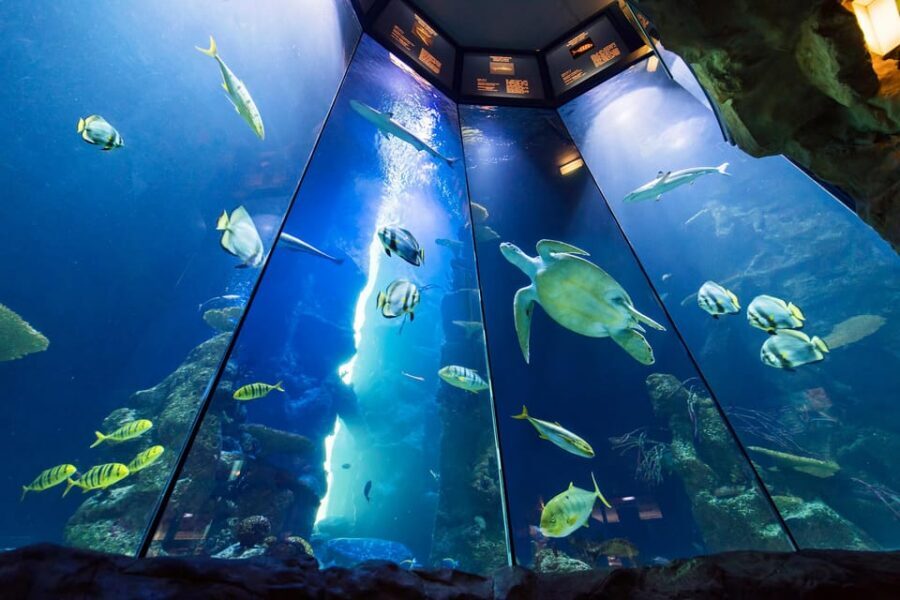
- Atlantic walk-through time: plan for lingering so you don’t rush past the sharks and rays
- World-famous poisonous lizard moment: the reptile highlight is a big reason to go
- 11-floor route: a top-to-bottom strategy helps you see more without backtracking
- Rooftop terrace views: the photo stop is part of the experience, not an afterthought
- Busy-family energy: go smart with timing if you want calmer viewing
Haus des Meeres in Vienna: a WWII tower that turns into an animal adventure
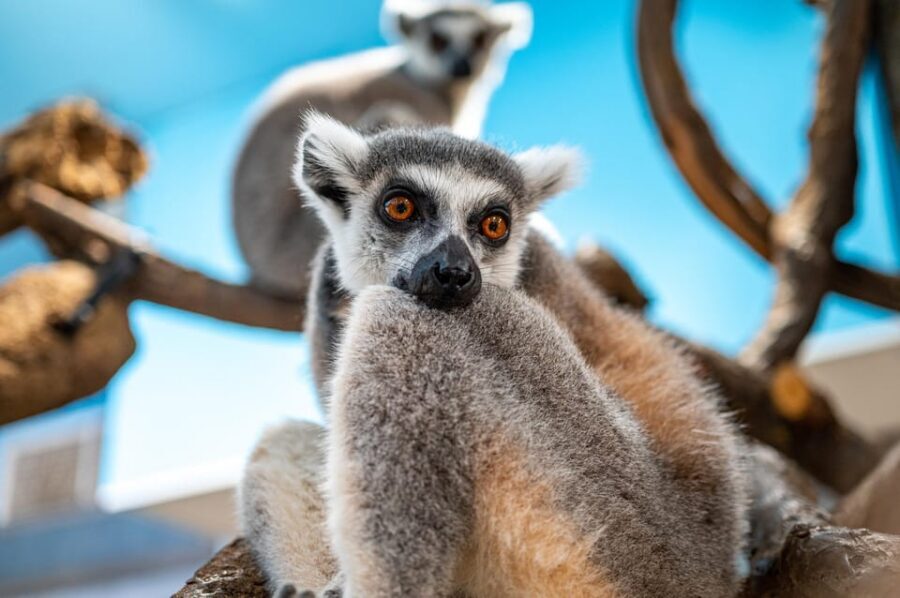
Haus des Meeres (officially the Aqua Terra Zoo) is Vienna’s aquarium-with-a-conscience. The building itself is the hook. It used to be an anti-aircraft tower from WWII, and now it’s a vertical zoo stacked across multiple levels.
That change matters. A typical aquarium is basically “walk in, look straight ahead, repeat.” Here, you’re climbing, turning corners, and switching from saltwater to land animals to insects in one continuous route. The whole thing feels like exploring one big vertical world rather than hopping between separate exhibits.
And the animal numbers help set expectations. You’re looking at 10,000+ animals, spread across 11 floors, so you don’t need to feel like you must see every single tank. The value is in choosing a pace, picking your favorites, and letting the rest support your wandering mood.
A few more Vienna tours and experiences worth a look



Entering the building: how the layout affects what you’ll see

Your ticket gives access to the full zoo plus the rooftop terrace. You also get an express security check, so you’re not stuck waiting at the worst possible moment.
Once inside, the biggest practical decision is flow. One smart suggestion from recent visitors: start on a higher floor (a reviewer recommended beginning around the 10th floor) and work top to bottom. That route tends to reduce backtracking, and it also sets you up for the terrace views when you want a calmer pause.
Even with clear signage, the scale can feel like a lot. If you’re visiting with kids—or you’re someone who likes to stop often—give yourself time to reorient. Short stops are fine. Just don’t plan to do everything in a quick coffee break.
Walking the Atlantic: sharks, rays, and turtles in motion
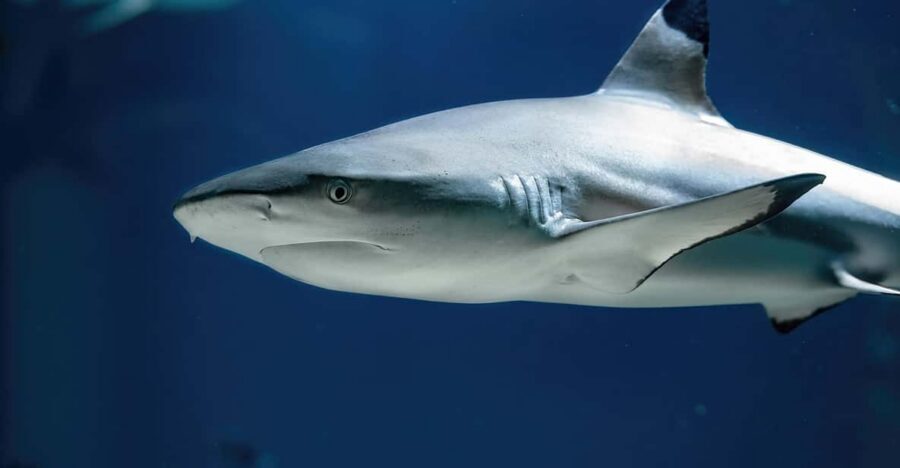
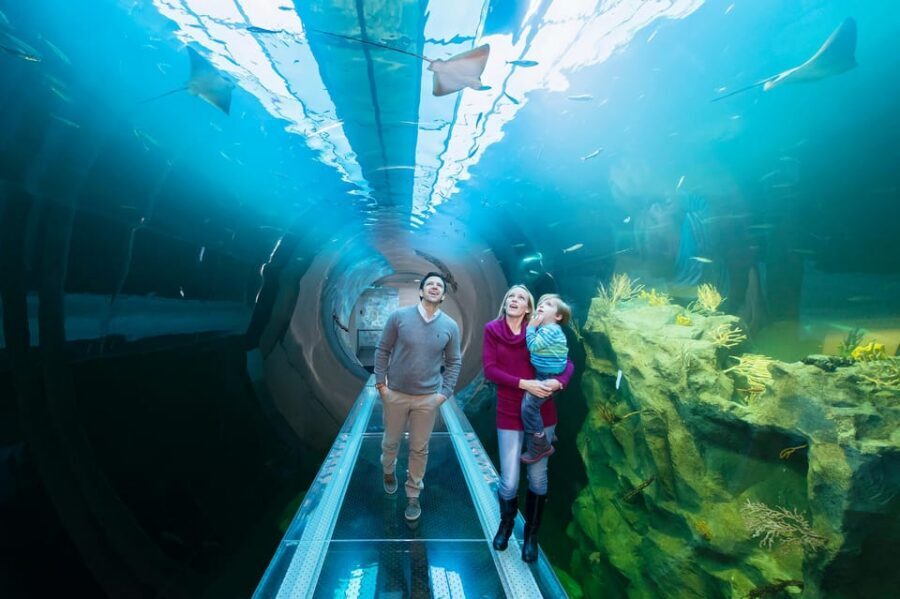
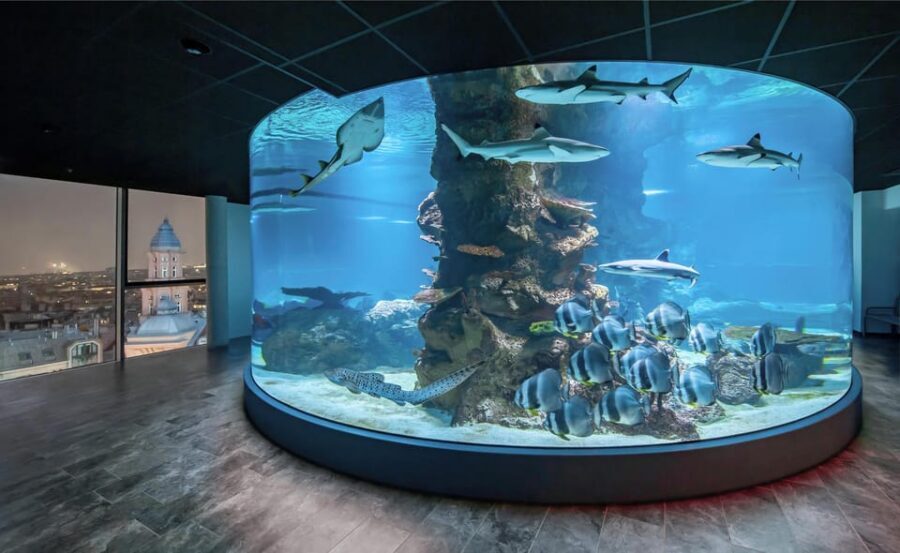
This is the headline area for a reason. The Atlantic region is designed as a walk-through experience, so you’re not just staring at a tank. You’re moving along it, and that makes a difference with animals like rays and turtles, where posture and spacing matter.
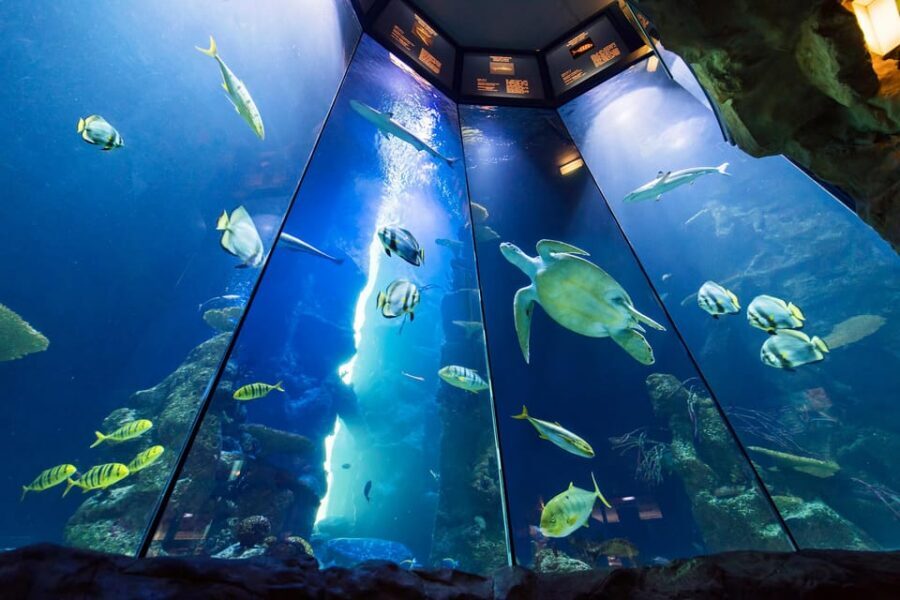
Expect to see sharks, rays, and aquatic turtles, plus a mix of other marine creatures in saltwater and freshwater zones. You’ll also run into smaller ocean icons like seahorses and stingrays, along with bigger, showier species that tend to draw your attention back again and again.
What I like about this section is the balance. It’s not only for shark-chasers. The rays and turtles reward people who slow down long enough to watch how they float, turn, and track movement. If you like photography, this is also where you’ll spend time—just expect glass reflections if the tanks are crowded or the viewing angle isn’t perfect.
Practical tip: if you’re visiting during a peak family window, keep your expectations flexible. Even when you’re in the right spot, bodies and chatter can limit how long you get an unobstructed view.
Reptile and rainforest highlights: poisonous lizards, snakes, monkeys, and flying foxes
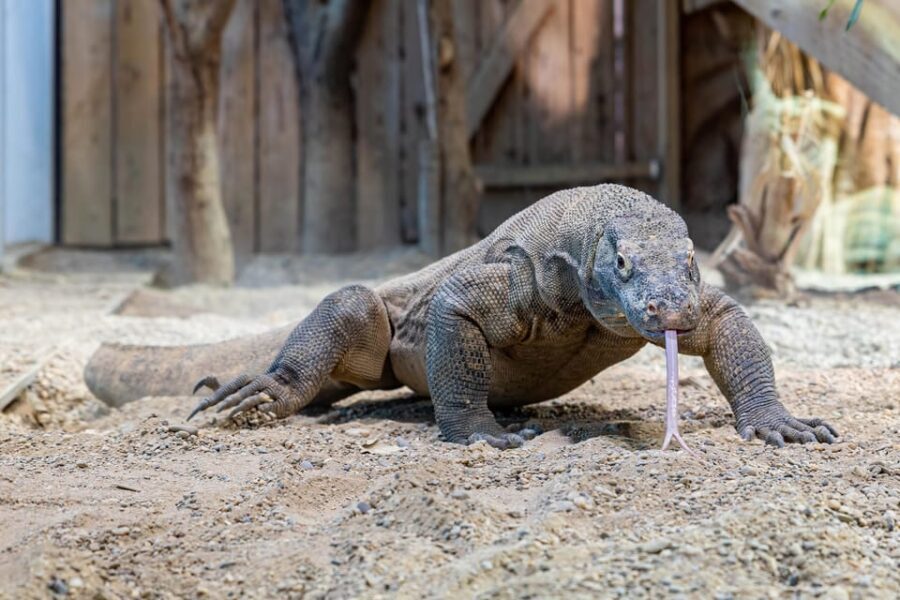
Haus des Meeres leans into variety hard, and the reptiles and jungle zones are key.
A major standout is the reptile section built around the world’s most poisonous lizard (it’s specifically called out as the biggest and most poisonous lizard in the world). Whether you’re a science person or just love extreme facts, this is the exhibit that feels like a “set piece.” You’ll spend longer there than you planned, because it’s the kind of animal most people don’t ever see in real-life conditions.
You’ll also find a classic lineup of scaled favorites: snakes and additional lizard species. The zoo’s reptile-and-aquarium overlap is part of the appeal. You go from marine glass to land scales without the mental reset that a traditional zoo forces.
Then comes the jungle side—think monkeys, birds, flying foxes (fruit bats), and insects. This is where the building stops feeling like a museum and starts feeling like a living habitat circuit. Flying foxes can be a quiet, slow spectacle. Monkeys and birds add movement and sound. Insects fill the gaps, which is great if you like the “wait, zoom in” moments.
One review also mentioned how impressive some of the smaller critters were, including insects and tiny monkey displays. That’s a good reminder: don’t only chase the biggest animals. The small stuff is often the easiest to miss.
Going up and down: how 11 floors change the pacing

The real magic of Haus des Meeres is vertical. You’re not just moving from room to room. You’re moving through multiple levels, each shifting the mood.
This is why a top-to-bottom plan can be so useful. Starting higher helps you keep momentum and prevents you from ending up at the bottom while you’re mentally exhausted. If you start low, you may rush through the middle just to reach the terrace.
Also, the zoo includes a rooftop terrace, which acts like a natural finish line. Many people time it that way because it’s a break from animal density and a chance to reset your eyes after hours of glass and bright lighting.
What to expect in the middle of your climb: lots of exhibits that blend marine life, reptile rooms, and bird-and-insect sections. You’ll see corals and freshwater and saltwater fish. You’ll also notice that some rooms can be less available depending on the day. That doesn’t ruin the visit—but if there’s a specific animal you’re hunting (for example, big shark expectations), stay realistic.




The rooftop terrace and the 11th-floor restaurant stop

If you do only one “pause” during your visit, make it the terrace. The rooftop terrace is included with your entry, and it’s the spot for city views and photos from above.
Plan it as a breather, not a quick snack stop. After a few floors, your eyes need a reset. The terrace gives you that, and it also breaks up the nonstop experience of viewing enclosures.
There’s also a restaurant/bar on an upper level, with one reviewer specifically praising an 11th-floor terrace restaurant. Be ready for a wait for a table. That’s not a dealbreaker. But if you’re trying to fit everything into a short time window, you may want to snack earlier or treat the restaurant as optional rather than mandatory.
Animal feeding and the one thing that depends on the clock
Your ticket includes access to animal feeding with commentary, but only on certain days and times. That means it’s worth checking what’s scheduled when you arrive, then deciding if it’s worth the wait.
Feeding moments are helpful for two reasons. First, you often get a short explanation that connects what you’re seeing to behavior, not just names. Second, it can reorder your priorities. If feeding lines up with your route, it can become the best “anchor moment” in an otherwise self-paced day.
One feeding item is not included: lemur feeding. If lemurs are your main mission, you’ll need to plan differently than you might for the general feeding commentary.
Timing your visit: how long you really need
You’ve got a 1-day ticket, and you’ll see starting times based on availability. Now for the real question: how long should you plan?
Here’s the honest answer based on how the zoo behaves in practice:
- If you’re short on time, you can still make it through a lot in around 1.5 hours, especially if you move quickly and pick key exhibits.
- If you want the full experience—multiple habitats, plus time for the terrace—plan 4 to 5 hours when you can.
Crowds matter. One tip from recent experiences: if you can, consider going later in the day for fewer small kids. Another review noted the opposite tradeoff: mornings can still be busy, and noise can interfere with viewing and photos. Translation: pick the time that matches your personality. If silence is your priority, avoid the peak family waves.
And yes, glass can affect picture quality. If you’re photographing tanks, you’ll want decent angles and some patience.
Ticket value for $27: what’s included, what’s extra, and why it adds up
At about $27 per person, Haus des Meeres isn’t a bargain aquarium. It’s more like paying for a full day attraction with structure, not just entry to a single “wow” tank.
What you get for that price is solid:
- Full zoo access across the building
- Rooftop terrace access
- Express security check
- Some animal feeding with commentary depending on schedule
What you don’t get:
- Food at the restaurant
- Lemur feeding
So the value question comes down to fit. If you like variety—fish, reptiles, insects, and flying bats—and you’re the type who enjoys walking through exhibits at your own pace, $27 feels fair for a Vienna day.
If you’re coming only for one animal and you’re expecting a very specific large-species show, you might feel let down. Some fans were hoping to see bigger versions of animals in the collection, and some exhibits can be missing on a given day. That’s not unique to this zoo, but it’s worth thinking about before you buy.
Who should go to Haus des Meeres (and who might want a different plan)
This is an easy “yes” for:
- Families who want a multi-stop indoor day
- Animal lovers who like science-meets-wildlife displays
- People who enjoy vertical attractions and switching habitats
- Anyone who wants city views at the end of a zoo circuit
It’s a softer “think twice” if:
- You’re extremely sensitive to noise and crowds
- You only care about one featured species and you’ll be unhappy if it’s not the exact size you imagined
- You only have a short time and need everything in a strict timeline
That said, even short visits work if you go in with a route plan: pick your must-sees (Atlantic, poisonous lizard highlight, terrace), then fill the gaps with whatever grabs your attention.
Should you book Haus des Meeres in Vienna?
If you want a Vienna day that mixes wildlife with a real WWII setting, I’d book it. The 11 floors, the Atlantic walk-through, and the terrace views are a rare combo, and the scale of 10,000+ animals makes it feel worth your time even if you don’t see every room.
Just don’t treat it like a guaranteed “perfect animal checklist.” Some rooms may be unavailable, and the aquarium experience depends on crowd levels and timing. If you go with flexible expectations and a simple plan—top-to-bottom start, then Atlantic, then terrace—you’ll get a very satisfying day.
FAQ
How long is the Haus des Meeres visit?
The entry ticket is valid for one day, and you can explore at your own pace. Starting times depend on availability.
How much does the Vienna Haus des Meeres entry ticket cost?
The price is listed as $27 per person.
What does the ticket include?
Your ticket includes access to the entire zoo and the rooftop terrace. It also includes animal feeding with commentary on certain days and times.
Is food included with the ticket?
No. Food at the restaurant is not included.
Is lemur feeding included?
No. Lemur feeding is listed as not included.
Can I skip the line for security?
Yes. The ticket includes access through an express security check.
Is there a rooftop terrace?
Yes. Rooftop terrace access is included with the entry ticket.
Is animal feeding guaranteed?
Feeding with commentary is included, but it’s available only on certain days and at certain times.
Is Haus des Meeres wheelchair accessible?
Yes, the experience is wheelchair accessible.
Is free cancellation available?
Yes. You can cancel up to 24 hours in advance for a full refund.