REVIEW · VIENNA
Mozarthaus Vienna Admission Ticket
Book on Viator →Operated by Mozarthaus Vienna · Bookable on Viator
Mozart’s Vienna apartment feels oddly close. With this Mozarthaus Vienna admission ticket, you get a 3-floor exhibition built around his peak creative years, including the apartment where he lived from 1784 to 1787 and composed major works. I especially like how the museum mixes location-based storytelling with standout listening material, and I love that the audio guide helps you connect scenes to specific pieces Mozart wrote during his Vienna years. One heads-up: you may not find every room dressed like it was in Mozart’s time, and some displays are presented as documents or reconstructions rather than a full-on period-furnished house.
Plan for about 1 to 2 hours, and you can move at your own pace through the three levels. The format is straightforward: mobile ticket in hand, English option for the audio guide, and an exhibition that’s clearly designed to be read and listened to, not rushed. The one drawback to consider is that the museum can feel light on physical artifacts depending on what you’re hoping to see—so if you’re after an apartment overflowing with original furniture, adjust expectations before you go.
In This Review
- Key Highlights You’ll Want to Know
- Entering Mozarthaus Vienna Near St. Stephen’s: Easy to Pair with a Walking Day
- What’s Inside: The 3-Floor Exhibition Layout (And Why It Works)
- Stop 1: Third floor focus—Mozart’s personal and social Vienna
- Stop 2: Second floor focus—colleagues and collaborations
- Stop 3: First floor—Mozart’s apartment (the centerpiece)
- Mozart’s Apartment (1784–1787): The Real Reason to Buy This Ticket
- The Audio Guide in English: How to Use It for Maximum Value
- Duration and Timing: How Long You Actually Need
- Price and Value: Is $19.27 Worth It?
- Practical Tips That Make the Visit Smoother
- Who This Works Best For (And Who Might Feel Underwhelmed)
- Should You Book the Mozarthaus Vienna Admission Ticket?
- FAQ
- FAQ
- How long does the Mozarthaus Vienna admission ticket take?
- What languages are available for the audio guide?
- Is food included with the ticket?
- Is there a guide or group tour, or is it self-paced?
- What time is Mozarthaus Vienna open?
- Can I get a refund if I cancel?
Key Highlights You’ll Want to Know
- Three floors, one clear story: Vienna years first, then colleagues and collaborations, then the apartment centerpiece.
- Mozart’s apartment (1784–1787) is still intact and anchors the whole experience.
- Audio guide in 13 adult languages and 8 children’s languages (and it’s available for this ticket).
- Focus on Mozart’s output in Vienna—including the idea that he composed more music here than anywhere else.
- Good value for music lovers because it’s designed to be lingered over, not skimmed.
Entering Mozarthaus Vienna Near St. Stephen’s: Easy to Pair with a Walking Day
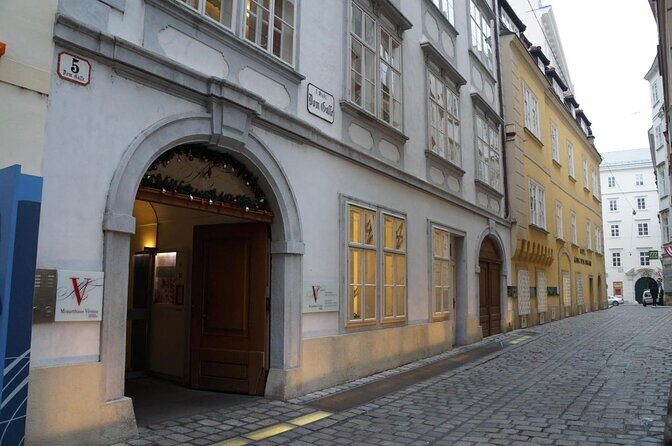
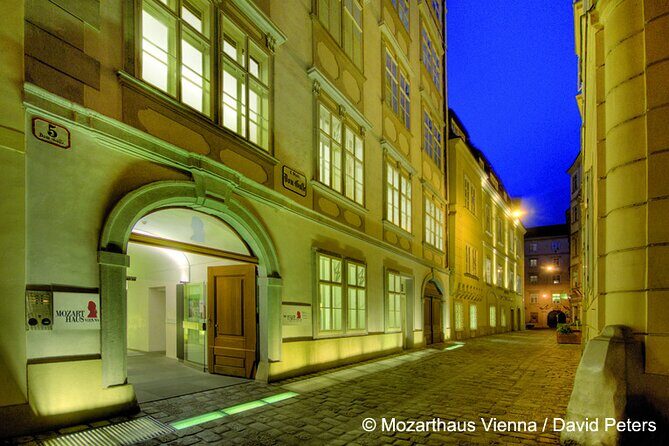
Mozarthaus Vienna sits in a part of the city you can easily stitch into a classic Vienna stroll. If you’re spending time around St. Stephen’s Cathedral, this is a great add-on because it fits naturally into a walking loop instead of forcing a complicated transit plan.
On the ground level, you’ll step into an exhibition that’s organized to keep you moving without a crowd-plow feeling. The ticket is for entry, and there’s no hotel pickup or drop-off included—so plan to arrive under your own steam. Good news: the attraction is near public transportation, which makes it simple to adjust if your day runs long.
Hours are steady: 10:00 AM to 7:00 PM daily for both 2024–2025 and 2026. That’s useful because you can pick a time that matches your energy. In Vienna, museum mornings can get crowded fast, so a later start can feel calmer—especially if you want time to listen properly.
A few more Vienna tours and experiences worth a look


What’s Inside: The 3-Floor Exhibition Layout (And Why It Works)
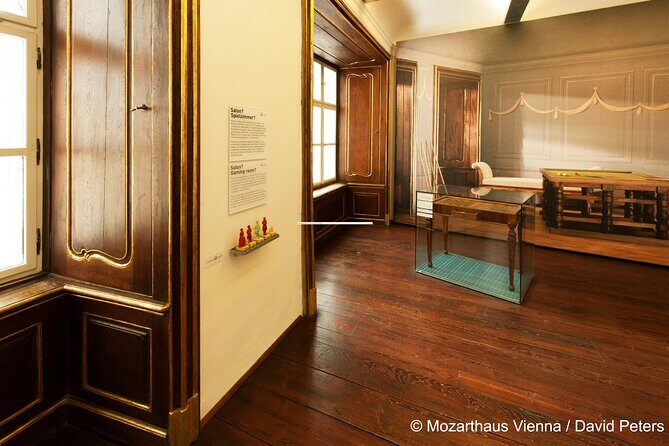
The exhibition spans three floors, and each level has a different job. What I like is that it doesn’t treat Mozart like a statue. It treats him like a working composer living inside Vienna’s social and musical machine.
Stop 1: Third floor focus—Mozart’s personal and social Vienna
You start with context. On the third floor, the exhibit frames Mozart’s personal and social situation in Vienna. It’s built around a quotation Mozart sent to his father Leopold in Salzburg in 1781, setting the tone for how Vienna looked and felt to him at the start.
This part matters because it explains the Vienna “why.” You’ll understand what kind of circles Mozart was moving through and why those connections shaped what he wrote afterward.
Stop 2: Second floor focus—colleagues and collaborations
Next comes the second floor, where you shift from the personal lens to the musical network. You look at Mozart’s main musical colleagues in Vienna and how he collaborated with librettist Lorenzo da Ponte on major operas like The Marriage of Figaro and Don Giovanni.
If you’re a classical music fan, this floor is the one that helps you make mental links between the people behind the music. It also helps if you’re not a “music theory” person—you can still track the human collaboration behind the masterpieces.
Stop 3: First floor—Mozart’s apartment (the centerpiece)
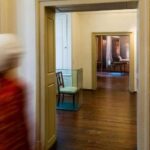
Finally, you reach the centerpiece: Mozart’s Apartment, where Mozart and his family lived from 1784 to 1787. This apartment is described as the largest, most elegant, and expensive Mozart ever occupied, and the museum emphasizes that it is the only one still intact today.
This is the floor where the whole ticket clicks into place. After you’ve learned how Mozart interacted with Vienna socially and musically, seeing the apartment makes the story feel physical.





Mozart’s Apartment (1784–1787): The Real Reason to Buy This Ticket
Let’s be honest: the headline draw is the apartment. This is where you can stand in the space tied to the period when Mozart wrote The Marriage of Figaro and several of the Haydn Quartets (three of the six).
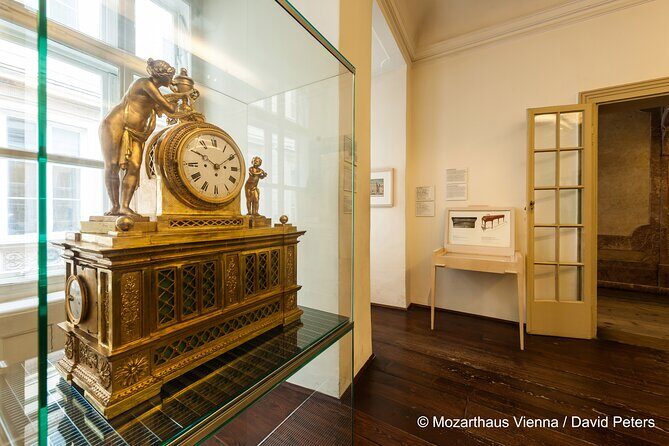
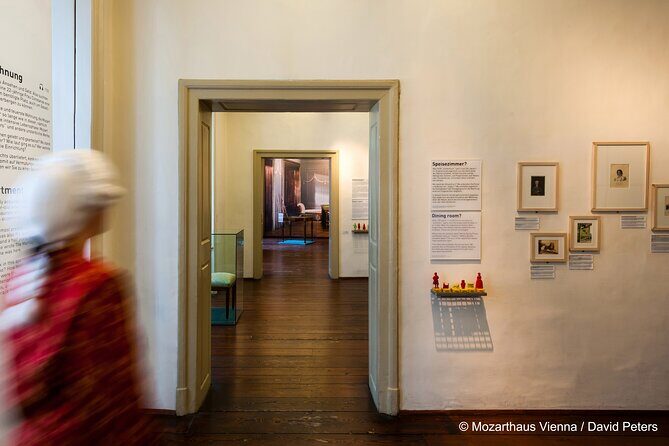
What I like about the way Mozarthaus Vienna handles this is that it doesn’t ask you to pretend it’s a time machine. It’s clear the museum uses the intact apartment and supporting materials to tell the story. So you get the location-based magic—without needing everything to look exactly like a restored scene from the 1780s.
Here’s the key expectation-setting tip: if you come hoping for a full room-by-room, furniture-perfect recreation, you might feel a little let down. Some visitors highlight that there are fewer original period furnishings than they expected. The flip side is that even when objects are limited, the apartment still gives you that rare experience of being in a place where the work was made.
Also, keep in mind photo rules. One review notes photos weren’t allowed inside, so assume there may be restrictions once you’re in the rooms and plan to enjoy the view with your eyes instead of your camera.
The Audio Guide in English: How to Use It for Maximum Value
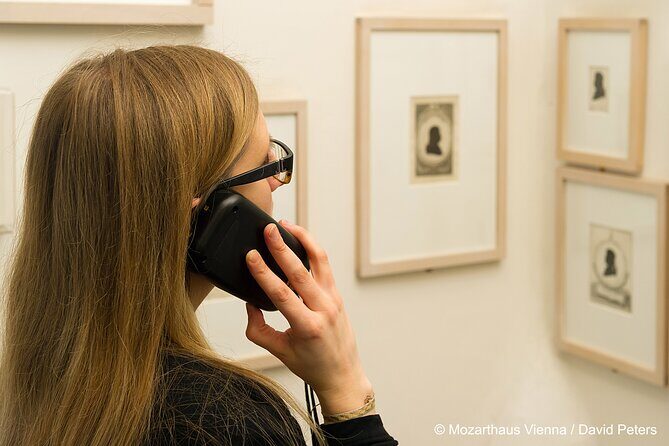
This admission ticket includes an audio guide available in 13 languages for adults and 8 for children, and it’s offered in English. That’s a big deal in a museum like this, because a lot of the meaning comes from connecting a room to the composer’s life and the works being discussed.
One practical plus from reviews: you typically don’t need to bring your own headphones. That can save you hassle at the start of the visit. Still, if you’re the type who likes your own earbuds for comfort, you might choose to bring them anyway—but it’s not necessary based on the experience described.
Pace is self-directed. The ticket experience is often experienced in around 1 hour, but you can easily stretch it toward 2 hours if you linger for the “listen, look, connect” rhythm. I’d treat it like a slow-walk museum. You’ll get more out of it that way, especially when you move from the apartment into the surrounding context on the other floors.
Duration and Timing: How Long You Actually Need
The duration is listed as about 1 to 2 hours, and that range matches how the museum is set up. The exhibition is three floors, with the apartment as the anchor. If you’re speed-walking, you’ll feel done sooner. If you listen carefully and take time with the apartment rooms, you’ll naturally use more time.
If you want my simple timing plan:
- If you’re short on time, go in, do the apartment first (or last), and stick to the audio at a steady pace.
- If you have breathing room, give yourself time to revisit the apartment area after you’ve heard the Vienna context.
Group size is kept small on this experience listing, with a maximum of 10 travelers. Even with small groups, the layout works best when you’re not rushing the audio segments. So small-group size is a comfort factor, not a speed boost.
Price and Value: Is $19.27 Worth It?
At $19.27 per person, this is priced like a focused museum entry rather than a big multi-attraction day. For me, the value comes down to one question: do you want Mozart’s Vienna years in a single organized visit?
You’re getting:
- Admission to the Mozarthaus exhibition
- The centerpiece Mozart’s apartment
- A layered story across three floors
- An included audio guide in multiple languages
If you’re a Mozart fan, this tends to feel worth it because you can connect the place to the compositions. Reviews also mention things like original manuscripts and clips of performances, which signal that the museum isn’t just talk—it tries to back up the story with materials.
The caution is about expectations. Some visitors feel the museum includes more reproductions or copies than they hoped, with fewer original furnishings than expected. So if your “museum brain” wants lots of physical artifacts everywhere, you may want to mentally budget for more interpretive displays than object-heavy exhibits.
Still, as an admission ticket for a high-signal Mozart experience in Vienna, the price feels reasonable for what you get—especially if you plan to spend real time listening.
Practical Tips That Make the Visit Smoother
Here are the details that help on the ground:
- Bring water or a small snack plan: food and drinks aren’t included.
- No hotel pickup/drop-off, so arrive on your own schedule via transit or walking.
- Mobile ticket is part of the setup, so have your phone ready at the entrance.
- Service animals are allowed, if that matters for your family.
- Expect English availability for the audio guide.
If you’re combining this with other sights, think about foot traffic. Vienna’s central areas are busy, and this museum rewards a calm pace. Going when you can take your time makes a noticeable difference in how much you get from the audio guide.
Who This Works Best For (And Who Might Feel Underwhelmed)
This ticket is a good fit if you:
- Love Mozart and want a place-based understanding of his Vienna years
- Prefer audio-guided museums where the story is structured
- Want an experience that takes about 1–2 hours and can slot into a day plan easily
- Like hearing the “who collaborated with who” side of classical music
It may be less satisfying if you:
- Expect a fully restored, furniture-heavy historic home with lots of original objects
- Want an artifact museum above all else, with fewer interpretive elements
In other words, this is best for the kind of traveler who enjoys context and listening as much as looking.
Should You Book the Mozarthaus Vienna Admission Ticket?
Yes—if Mozart is your kind of music and you like connecting a composer’s life to the work he produced. For a single-ticket visit, Mozart’s intact apartment and the story-based exhibition structure are hard to beat, and the included multilingual audio guide in English makes it a smart value.
I’d book it now if you’re:
- Staying in central Vienna and want a clean, walk-in museum plan
- Planning your day around St. Stephen’s and want a nearby cultural stop
- Comfortable with a museum that may rely on interpretation, documents, and smart display choices instead of a perfect furniture inventory
Skip the ticket mindset if you’re hunting for an object-heavy museum where you can spot loads of original furniture in every room. In that case, you might still enjoy it—just approach with the right expectations: it’s a Mozart-in-Vienna experience built for understanding, not just collecting visuals.
FAQ
FAQ
How long does the Mozarthaus Vienna admission ticket take?
You should plan for about 1 to 2 hours, depending on how much time you spend listening and looking across the three floors.
What languages are available for the audio guide?
The audio guide is available in 13 languages for adults and 8 languages for children, and this experience is offered in English.
Is food included with the ticket?
No. Food and drinks aren’t included, so you’ll want to plan snacks or water on your own.
Is there a guide or group tour, or is it self-paced?
The ticket includes an audio guide, and the experience is designed so you can go at your own pace through the exhibition.
What time is Mozarthaus Vienna open?
For 2024–2025 and also 2026, it’s open Monday through Sunday from 10:00 AM to 7:00 PM.
Can I get a refund if I cancel?
Yes. You can cancel up to 24 hours in advance for a full refund. If you cancel less than 24 hours before the experience starts, the paid amount isn’t refunded.