REVIEW · VIENNA
Vienna at First Glance a Private Walking Tour for First Timers
Book on Viator →Operated by SCHINDL Local Services & Day Tours · Bookable on Viator
Vienna’s landmarks get explained fast. This private walking tour is a great first pass at the city, with a route that strings together Belvedere views, Ringstrasse architecture, and the big Habsburg sites in just a few hours. I like the doorstep pickup approach because you start moving with zero meeting-point stress, and the walk has a pace that works for real sightseeing, not museum-hopping marathons. I also love that your guide points out how to use Vienna’s transit systems, so you leave with confidence for the rest of your trip.
The one thing to consider: this is designed to cover a lot, so you’ll spend most of the time outdoors and only touch interiors lightly. If you’re hoping for long, in-depth time inside major buildings, you’ll likely want to pair this with a separate museum or cathedral visit.
In This Review
- Key highlights at a glance
- Vienna at First Glance starts right where you stay
- Price and what $344.67 per group buys you
- Belvedere Hill and the Ringstrasse: imperial Vienna in one morning
- Rathausplatz, Parliament, and Volksgarten: power, symbolism, and a breather
- Heldenplatz to Hofburg: the Habsburg story, in stone and street corners
- Goldenes Quartier Vienna, Graben, and Kohlmarkt: luxury streets and one unforgettable column
- Stephansdom: how to read the cathedral before you walk inside
- Who this private tour suits best (and who should pick another format)
- Should you book Vienna at First Glance? My quick verdict
- FAQ
- How long is the Vienna at First Glance walking tour?
- Is this tour private?
- Where do you meet the guide?
- What language is the tour offered in?
- What is the price?
- Is public transportation included?
- Are attraction tickets included?
- Is the tour suitable for people with physical limits?
- Are pets or service animals allowed?
- Can I cancel for a full refund?
Key highlights at a glance
- Doorstep pickup at hotels, vacation homes, and the Handelskai 265 pier area
- Private group means your guide can slow down for questions and photos
- A smart first-timer route built around Vienna’s imperial streets and palaces
- Public transport guidance for getting around after the tour
- Mostly exterior stops with an emphasis on context you can remember later
- Stephansdom stop without entry so you can explore the interior on your own
Vienna at First Glance starts right where you stay
This tour’s biggest advantage is how it begins: you meet your guide at the doorstep of your hotel or vacation rental in town, or at the city pier area at Handelskai 265. That matters in Vienna, because you’re usually on cobbles, you’re dealing with tram and metro schedules, and you’re often juggling jet lag. Starting right at your door means you can spend your energy on the sights, not on figuring out the meeting point.
It’s also private, with a group size of up to 10 people for the whole tour. That sounds small, because it is. The guide isn’t performing for a crowd of strangers; instead, you can ask a question, request a slower pace, or focus on what interests your group more. On top of that, the tour is about 3 hours, which is a sweet spot for first-time orientation. You get enough time to connect the story of the city, but not so much that you lose energy before the rest of your day.
You’ll be working at a moderate walking pace, so comfortable shoes help. And since most of the time is spent outside, dress for the weather. One good rain or cold snap can turn a “quick stop” into a miserable shuffle, so layer up.
You can also read our reviews of more walking tours in Vienna
Price and what $344.67 per group buys you
The price is $344.67 per group (up to 10), and that structure is part of why this tour can be good value. If you’re traveling with family or friends, you effectively split the cost across several people, and a private guide becomes much more affordable than the typical per-person pricing you see elsewhere.
What you’re paying for isn’t just a route. You’re paying for a professional Austria guide, with guidance that starts at your doorstep. Your guide also helps you understand what you’re seeing and what to do next—especially through practical advice about moving around the city afterward.
A key detail: most stops are marked as admission ticket free, and the one notable exception is Stephansdom interior admission, which is not included. So you’re not shelling out for entry fees during the walk unless you choose to. Public transportation costs are not included where you use transit, but the value is that your guide shows you how to do it efficiently rather than guessing.
If you want a quick, structured start that reduces decision fatigue for the rest of your Vienna stay, this price can make a lot of sense. If you only want museum interiors and plan to pay for those anyway, you may want a different tour format.
Belvedere Hill and the Ringstrasse: imperial Vienna in one morning
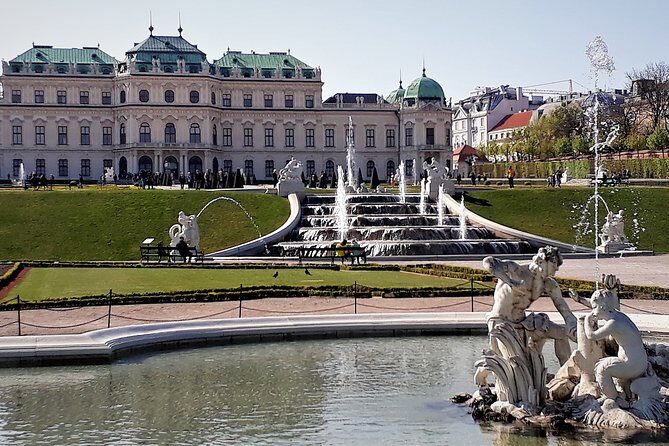
The tour kicks off with Upper Belvedere Palace from Belvedere Hill. Even if you’re not going inside, this stop is about seeing Vienna’s skyline correctly. The viewpoint sets the tone: baroque grandeur on a human scale, with the city’s shape and architecture giving you a mental map that sticks.
From there you move to Ringstrasse, Vienna’s famous boulevard that acts like a highlight reel of imperial building styles. You’ll ride past major landmarks including the Vienna State Opera, the Museum Quarter, and the Parliament area, plus the Soviet Monument on the way. Ringstrasse is often photographed from a distance, but with a guide you learn what you’re looking at: the “golden mile” of architecture, and how the city projected power through design.
Why this part works for first timers: it gives you the big picture early. After you see the boulevard sequence once, you can recognize buildings even when you’re walking later on your own. It’s also a good way to understand that Vienna’s story isn’t only about old palaces; it’s also about how modern states chose to represent themselves.
Possible drawback here: this section includes a scenic ride, which can feel like “transport” if you don’t care about architecture. If you love streetscapes and political-era design, you’ll get a lot more out of it.
Rathausplatz, Parliament, and Volksgarten: power, symbolism, and a breather
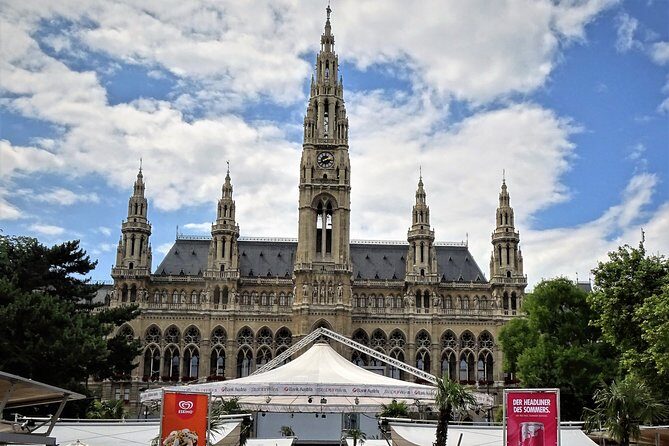
Next up is Rathausplatz, the space around the City Hall and near cultural and educational buildings like the University and Burgtheater. You’ll also pass Café Landtmann, a classic name in Vienna’s café culture. This stop is useful because it shows you the everyday public face of the city: not just palaces and monuments, but civic life.
From there you focus on Österreichisches Parlament. This building is a strong example of 19th-century historicism, and your guide explains why historicism matters here. It’s not just style. It’s Vienna choosing a visual language that says stability and legitimacy.
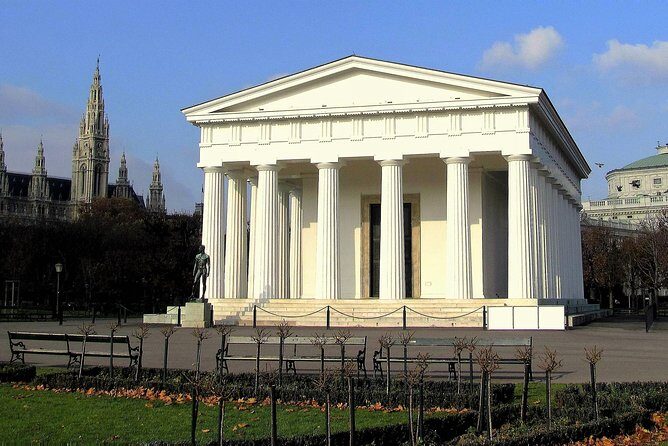
Then comes a shift in mood to Volksgarten. You’ll see the Theseus Temple, and the garden layout gives you a calmer, more graceful pause in the walking rhythm. This stop is a handy reminder that Vienna balances heavy symbolism with spaces designed for strolling, not just staring.
The practical side: these stops are short, so you won’t have time to wander freely. But that’s the point. You get the orientation cues, and you can later return to whichever building feels most worth your time.
Heldenplatz to Hofburg: the Habsburg story, in stone and street corners
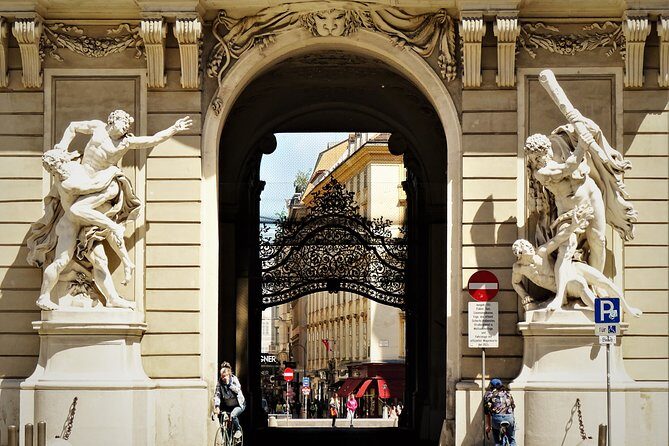
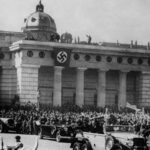
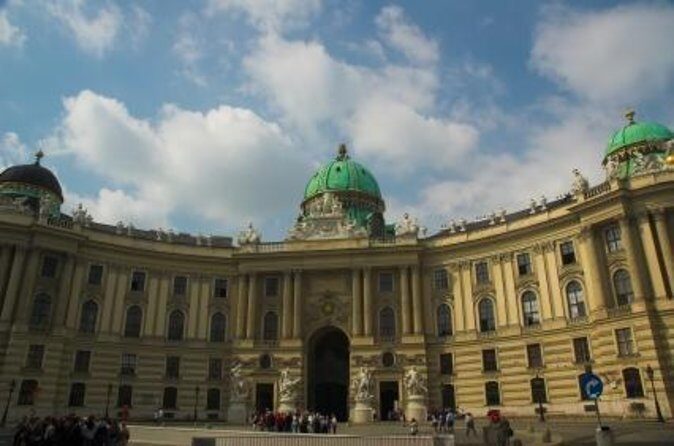
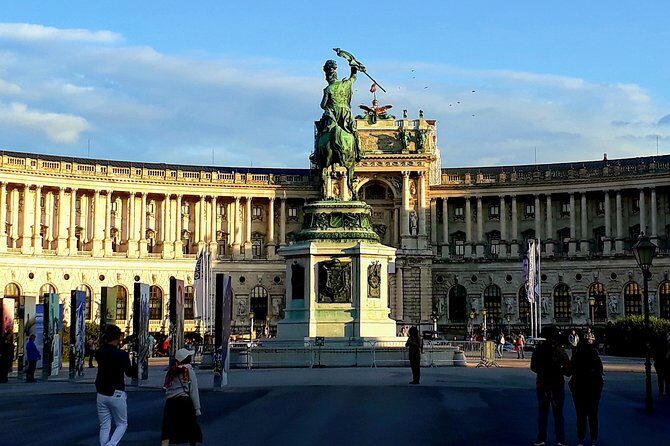
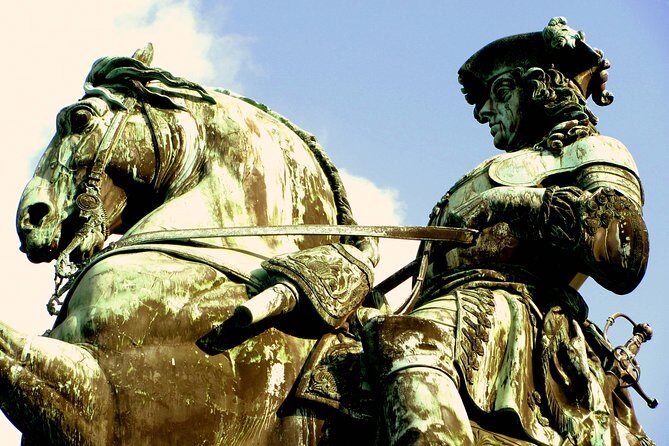
One of the most striking parts of the route is Heldenplatz. Here you’ll stand in front of the newest Hofburg wing framed by two monumental equestrian statues. You’ll also hear about the infamous 1938 balcony moment linked to the site. Even if you’re not a history fanatic, this is where Vienna’s past becomes less abstract. The setting explains why certain events still get discussed.
Then you move into Hofburg, walking through about 650 years of Habsburg history. Your guide connects the continuity of the place with the scale of the dynasty’s influence. The Hofburg complex can feel endless if you’re alone, but on a guided walk you get the “what matters most” map.
This section is also where you’ll start seeing how Vienna layers eras. The court story isn’t stuck in one century; it’s expressed through how buildings were used and reshaped over time. In practical terms, this helps you navigate later because you understand which walls and courtyards are the center of gravity.
Main consideration: because it’s a lot of story in a limited time, you’ll want to take breaks if your group gets overloaded. Private touring helps here. If someone needs a coffee moment, your guide can likely adjust the pace without turning the whole schedule into chaos.
You can also read our reviews of more private tours in Vienna




Goldenes Quartier Vienna, Graben, and Kohlmarkt: luxury streets and one unforgettable column
After the court-centered stops, the route heads to Goldenes Quartier Vienna, the luxury district. You’ll also stop for a local connection: Schwarze Kameel, a long-beloved meeting spot dating back to the early 1900s. That’s a smart move for first timers, because it prevents Vienna from feeling like only palaces and postcards. You get a sense for where locals historically met and how the city’s social life developed.
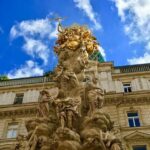
Next is Graben and Kohlmarkt, prestigious pedestrian streets that link the Hofburg area toward St. Stephen’s Cathedral. This is classic Vienna for strolling—wide enough to feel comfortable, close enough to keep the momentum. Along the way you’ll see the dramatic Plague Column, a Baroque masterpiece packed with symbolism.
This stop is valuable because it teaches you how to look. Vienna’s monuments aren’t only “pretty.” They’re built to communicate: power, faith, survival, and the idea that public art can carry meaning across generations. Once you understand that, you’ll start noticing details in other places too.
Small drawback: these are shopping streets, so if you’re hoping for a quiet, photo-only moment, you may find more foot traffic than at the palace viewpoint. Still, it’s exactly the kind of street you should walk later on your own, once you know where it leads.
Stephansdom: how to read the cathedral before you walk inside
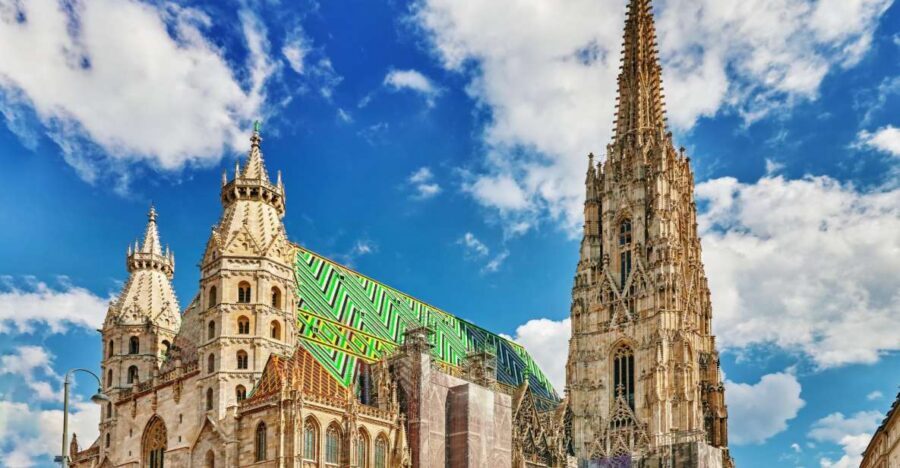
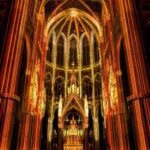
The final major stop is Stephansdom, Vienna’s spiritual heart. Your guide helps you “read” the cathedral by explaining messages and stories hidden in the stone. That matters because the exterior can feel like a single dramatic shape if you’re not sure what to look for. With guidance, you leave with a checklist in your head.
Then the timing works well for self-guided exploration: your guide leaves you at the cathedral so you can go in on your own. Interior admission is not included, so you’ll either pay then or decide to skip the interior and focus on the exterior and surroundings instead.
For many first timers, this is the best ending: you end with a place where you can slow down. The tour gives you context; then you control your pace. If you’re visiting with kids or someone who likes to roam, this handoff is a big win.
One practical tip: plan for a little extra time if you want to do the interior properly. Stephansdom is famous, but it can also be crowded. If you go in immediately after the guide leaves, you’ll likely have the best chance at a calmer first viewing.
Who this private tour suits best (and who should pick another format)
I think this tour is ideal if you fall into any of these groups:
- First-time Vienna visitors who want a structured start and a mental map by day one
- Families and mixed-interest groups that need flexibility and a pace that can handle snacks and questions
- Architecture and history fans who want context without committing to full museum days
- People who plan to use transit later and want to understand how to move efficiently
It may be less ideal if you’re arriving already committed to deep museum time, because the format is about orientation and outside landmarks. Also, if your group can’t handle a few hours of outdoor walking, you might prefer a tour that focuses more on indoor stops and shorter exterior segments. The good news is that private touring makes it easier to adjust the walk to your comfort level.
A note on guide variety: across past experiences with guides like Sabine, Walter, Annelie, Alexander, Brigitte, and Daniela, the common thread is the same—clear explanations, humor, and a pace that stays readable. Your exact guide will influence the tone, but the structure stays built for first-timers.
Should you book Vienna at First Glance? My quick verdict
If you’re trying to start Vienna the smart way, I’d book it. The value comes from three places: doorstep pickup, a tight 3-hour route that covers the city’s major stories, and practical guidance that helps you move around afterward. Most stops are built to be quick and memorable, and Stephansdom ends with a handoff that lets you explore at your own speed.
Skip it only if your main goal is long interior time inside major museums or if you already have a well-built plan for where you’ll spend your first day. In that case, you might prefer a longer, interior-focused tour.
If you want to get your bearings fast and leave Vienna feeling like you know what you’re looking at, this is a strong first stop.
FAQ
How long is the Vienna at First Glance walking tour?
It lasts about 3 hours.
Is this tour private?
Yes. It’s a private tour for your group only.
Where do you meet the guide?
You meet at your hotel or vacation home doorstep within town. Another meeting point is the city pier area at Handelskai 265. Other meeting points can be arranged.
What language is the tour offered in?
The tour is offered in English.
What is the price?
The price is $344.67 per group, up to 10 people.
Is public transportation included?
Public transportation where useful is not included. The tour is designed to help you travel like a local, but you should plan to cover transit costs if you use it during the tour.
Are attraction tickets included?
Many stops are listed as admission ticket free, including several key exterior viewpoints. Stephansdom interior admission is not included.
Is the tour suitable for people with physical limits?
It’s listed as suitable for travelers with moderate physical fitness.
Are pets or service animals allowed?
Service animals are allowed. Pets are not permitted in certain areas visited.
Can I cancel for a full refund?
Yes. You can cancel for a full refund if you cancel at least 24 hours in advance of the experience start time.