REVIEW · VIENNA
Vienna: Tickets to Haus der Musik
Book on GetYourGuide →Operated by Haus der Musik Museum GmbH · Bookable on GetYourGuide
Sound gets real at Haus der Musik. It’s a modern, interactive museum in Vienna focused on music, composers, and the science of sound, all inside a historic building tied to the Vienna Philharmonic story. The venue sits in the former Palais of Archduke Charles, where Otto Nicolai lived when he helped found the orchestra in 1842.
I love how interactive the exhibits feel, even when you’re learning names like Haydn, Mozart, Beethoven, Schubert, Strauss, Mahler, and Schönberg. I also like the Vienna Philharmonic connection, especially the conductor challenge and the New Year’s Concert experience in HD quality.
One thing to plan for: you should bring headphones, and food and drinks are not included, so you’ll want to snack before or plan a stop nearby.
In This Review
- Key highlights you’ll feel fast
- Haus der Musik: a museum built for sound you can touch
- The four floors: how the museum keeps you moving
- Vienna music history, explained with real objects and modern setups
- Mozart’s Namadeus Game: hearing your name as music
- Virtual conducting: face the Vienna Philharmonic
- Compose your own waltz with a throw of the dice
- The sound science section: interactive exhibits, noises, and instruments
- New Year’s Concert in HD: why it belongs in this museum
- Temporary exhibitions in the courtyard: adding a second storyline
- What to bring, and how to pace a big interactive museum
- Value check: is $22 worth it?
- Who should book Haus der Musik tickets?
- Should you book this ticket?
- FAQ
- How long is the admission valid?
- What’s included in the ticket price?
- Do I need to bring anything?
- Is Haus der Musik wheelchair accessible?
- Are food and drinks included?
- Do children get free admission?
Key highlights you’ll feel fast
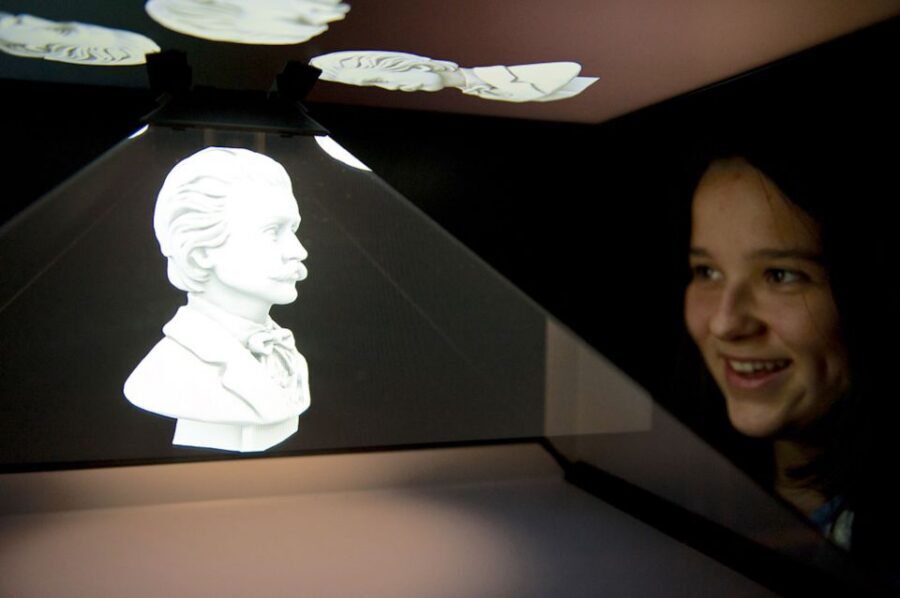
- Hands-on music history using historic documents, models, costumes, and personal items
- Vienna Philharmonic experiences including a virtual conducting challenge
- Mozart play mode with the Namadeus Game, where you hear your name as a Mozart-style composition
- Sound science that you can test with interactive displays, noises, and instruments
- A waltz you make yourself by composing music with a throw of the dice
- Four floors of changing focus, plus temporary exhibits in the courtyard
Haus der Musik: a museum built for sound you can touch
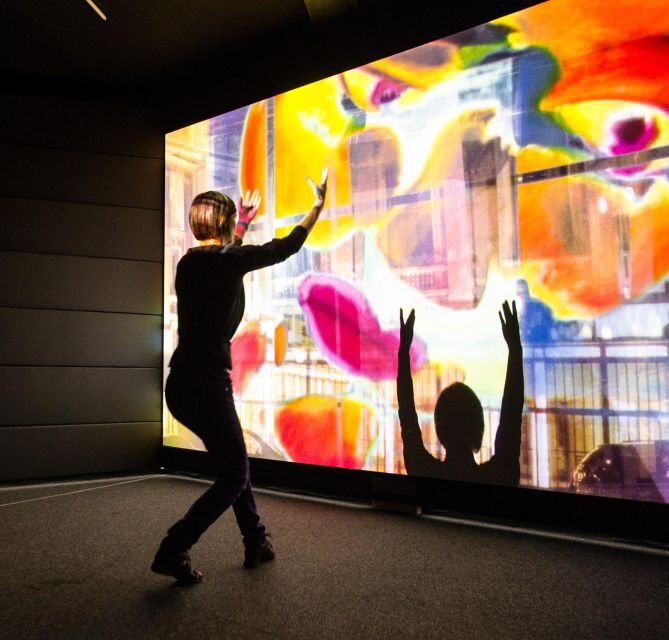
Haus der Musik is not a quiet museum where you stand and read. It’s built for action. The setting helps: the museum occupies a former palace, giving you that Vienna sense of layers—old power, old arts patronage, and then the later push to make music education hands-on.
What you’re actually walking into is a museum designed around a simple idea: music is history, but it’s also physics. You’ll see that idea working as you move floor to floor. One level talks composers and their world through artifacts and period context. Another pushes you into experiments where sound behaves like something you can test—tone, rhythm, pitch, and hearing.
At Seilerstätte 30 (1010 Vienna), it’s in the city where you can easily stack it with the rest of your day. The included coat check is a practical bonus if you’ve got a jacket, bag, or shopping weight.
A few more Vienna tours and experiences worth a look


The four floors: how the museum keeps you moving
Haus der Musik is organized across multiple floors, and that structure matters because it prevents the classic museum problem: your brain gets tired. You’re not stuck in one mode. You shift between storytelling, playing, and experimentation.
Here’s the core rhythm you can expect:
- A history-and-context level on “the Wiener Klassik” and beyond
- Interactive rooms where you test instruments, noises, and the basics of how sound works
- A performance-style section where you act like you’re directing musicians
- A Mozart section that turns listening into a game
You also get a temporary-exhibition angle in the inner courtyard. That’s the part that can add surprise. Some themes focus on individual musicians, while others focus on bigger music-historical topics like Viennese modernism.
The museum’s layout is big enough that you’ll want to take your time, but you can also do it faster if you’re laser-focused on the interactive highlights.
Vienna music history, explained with real objects and modern setups
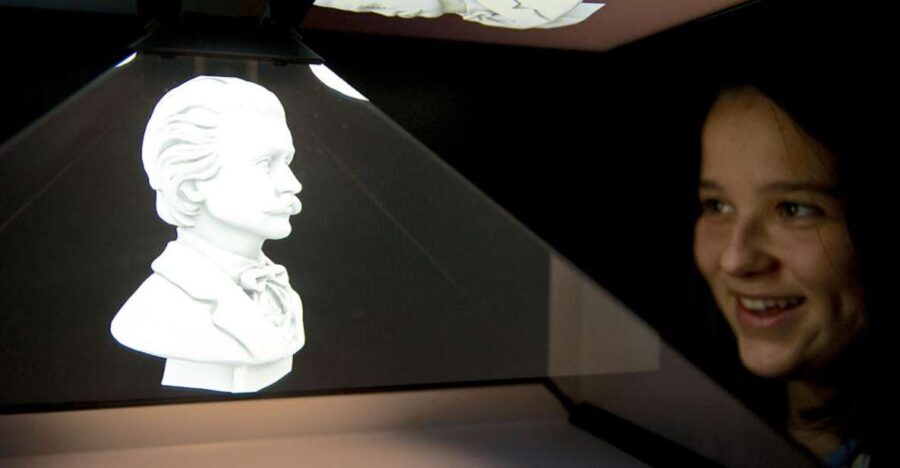
I like that the museum doesn’t treat the composers as distant statues. It introduces major figures—Haydn, Mozart, Beethoven, Schubert, Strauss, Mahler, and Schönberg—in a way that connects them to their surroundings. You’ll encounter historic documents and mementos, plus models and even costumes and personal items tied to the eras.
This matters because it gives you something concrete to hang the music on. Instead of memorizing names, you start to see how the social world of Vienna shaped the music—and how later generations responded to earlier styles.
You also get a contemporary presentation style. Modern installations help translate older material into something you can actually process during a museum visit. You’ll still learn, but you won’t feel like you’re trapped reading a textbook.
Mozart’s Namadeus Game: hearing your name as music
One of the most fun parts is the Namadeus Game. The idea is simple and clever: you hear your name as an original Mozart composition. This is the kind of interactive that works for people who love classical music and also for people who usually skip it.
Even if you don’t know much Mozart, the game gives you a reason to listen closely. You’re paying attention to melody and phrasing because your own name is part of the output. That’s a strong hook for kids, too. It makes music feel personal rather than academic.
Practical note: the Namadeus certificate is not included with admission. If a printed keepsake matters to you, plan for that cost.
Virtual conducting: face the Vienna Philharmonic
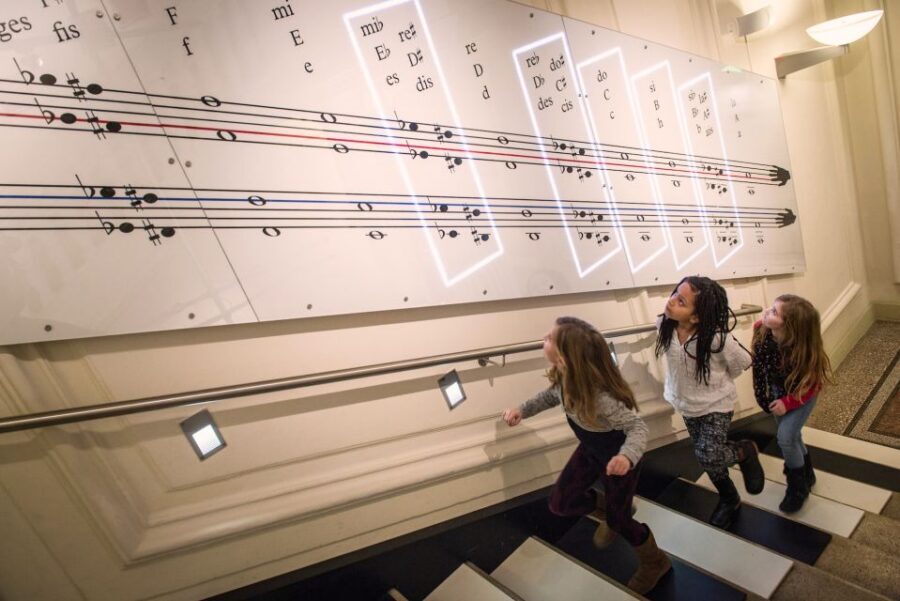
If you’ve ever watched an orchestra conductor and wondered what the job is actually like, you’ll appreciate the interactive conducting experience. The museum has a setup where you can test your talent as a conductor and face the world-famous Vienna Philharmonic Orchestra.
This is one of those exhibits that’s educational even if you have no musical training. You learn the basics of timing and control without feeling put on the spot. It’s performance mode, not theory mode.
Also, it’s a great shared activity. Adults can be competitive about it, and kids usually jump in without worrying about being perfect. The format tends to turn “I don’t get music” into “Wait, try again.”




Compose your own waltz with a throw of the dice
Another highlight is the waltz workshop mechanic: compose your own waltz with a throw of the dice. This takes the intimidating part of composition—decisions about structure—and turns it into play.
You’re still making music choices. You’re just doing it through a game system that removes the fear of doing it wrong. That’s what makes this kind of exhibit work: you get the feeling of creation, not just the feeling of observation.
For families, this is often the part that keeps kids busy longest. For adults, it’s a reminder that music isn’t only something you consume. Sometimes it’s something you can experiment with in a low-pressure way.
The sound science section: interactive exhibits, noises, and instruments
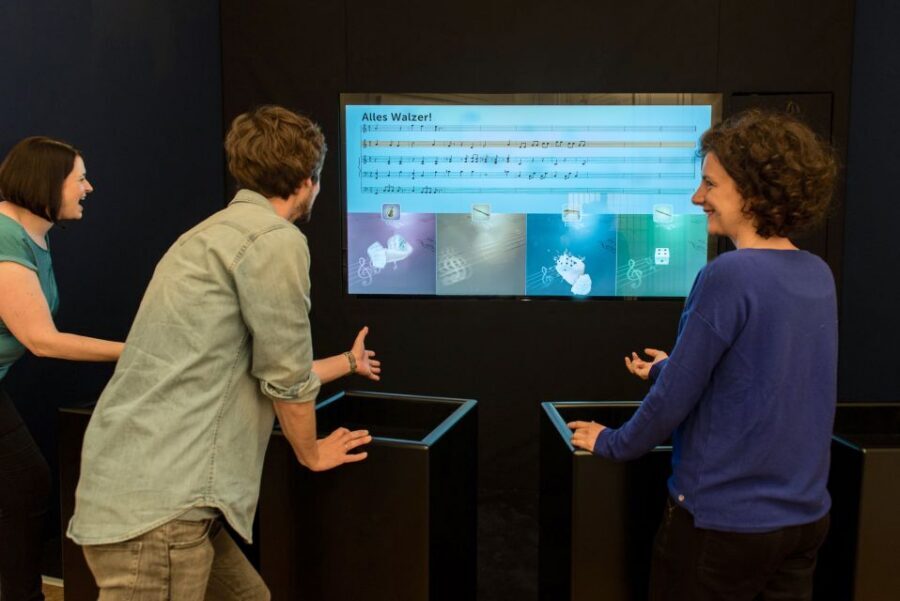
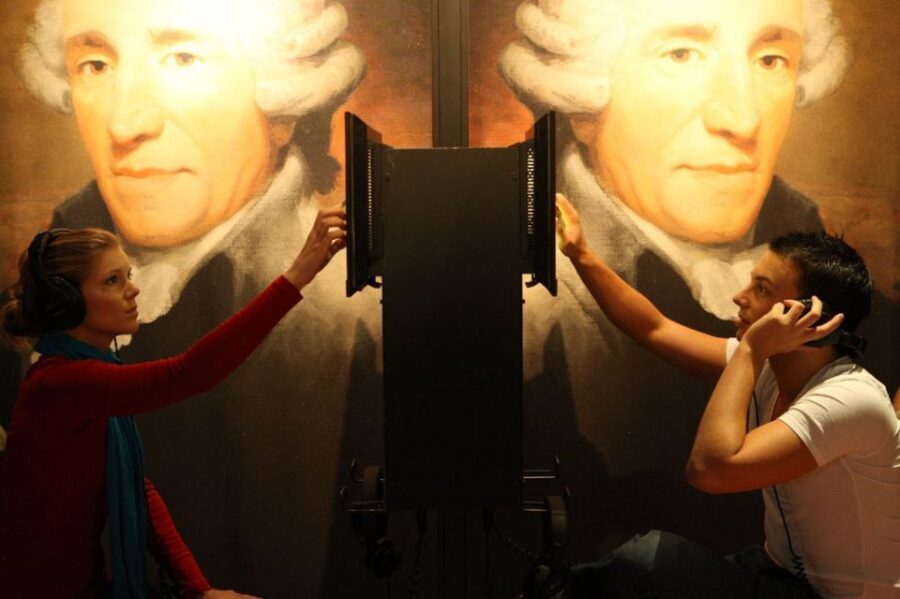
Haus der Musik goes beyond history by focusing on how sound works. You can take an acoustic journey into the science of sounds through interactive displays & instruments, plus experiments with noises.
This is where you’ll get something that’s useful even after you leave. You start recognizing how changes in pitch, volume, and tone affect what you hear. The museum doesn’t require you to understand engineering terms first. It teaches through interaction, where your senses do the explaining.
I especially like that this section ties back to the music you’ve been learning about. When the museum switches from composer stories to sound experiments, it feels connected rather than random.
If you’re traveling with a science-minded teen or a parent who wants more than just classical facts, this part is a big reason to come.
New Year’s Concert in HD: why it belongs in this museum
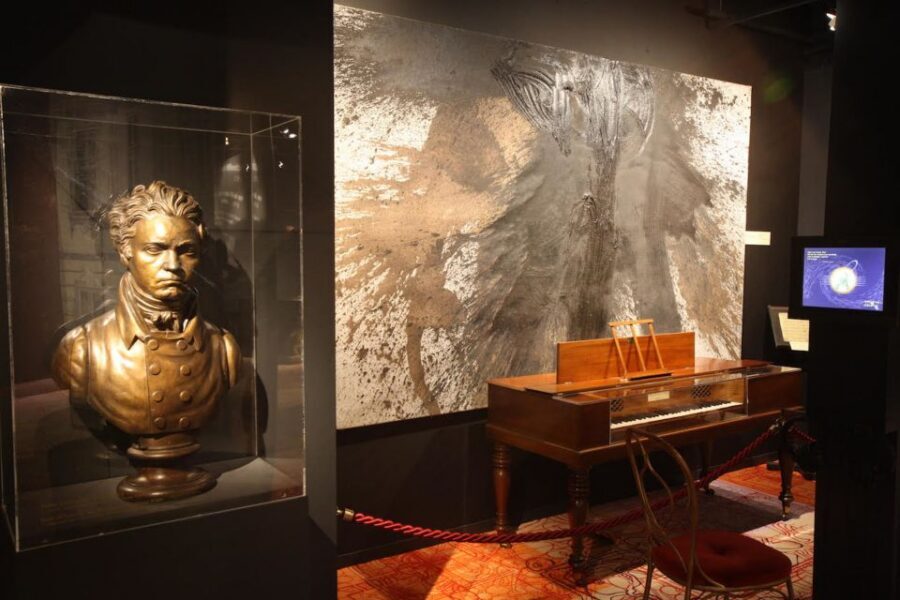
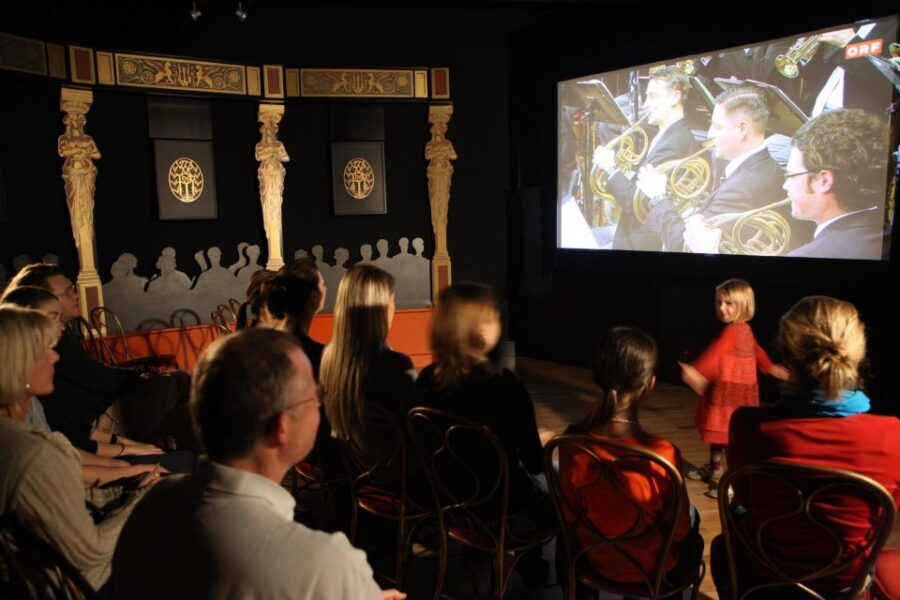
Another standout is the chance to listen to the Vienna Philharmonics’ New Year’s Concert in HD quality. This is music programming, but the museum placement changes how you experience it.
Instead of being stuck in a passive viewing mode, you can move through the museum first, learning about sound and interpretation, and then return to the concert feeling more aware of what you’re hearing. Even if you don’t know the concert tradition, the HD presentation makes it crisp and easy to follow.
It’s also a good “pause” option when you’ve been playing interactive exhibits for a while and want a more straightforward listening moment.
Temporary exhibitions in the courtyard: adding a second storyline
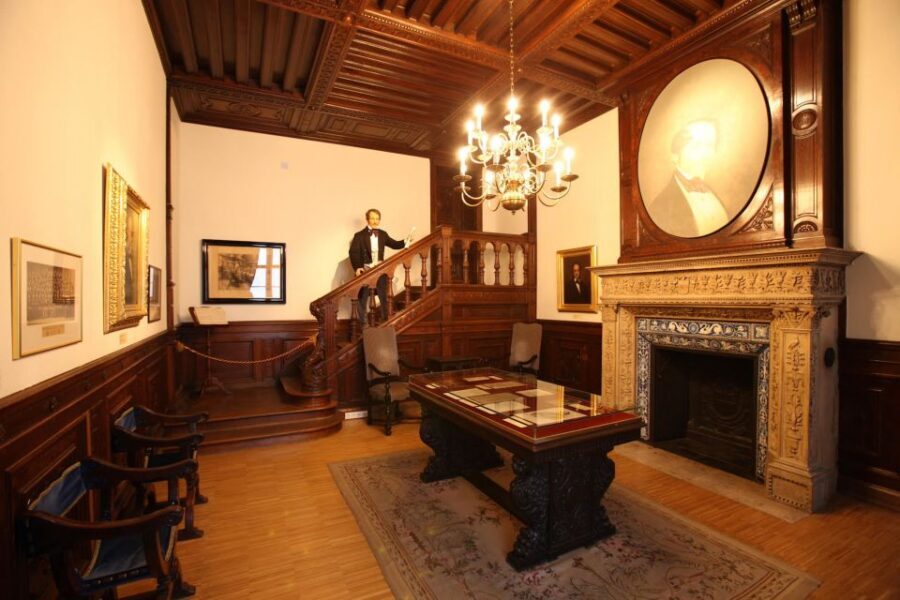
Beyond the permanent exhibition, Haus der Musik uses the inner courtyard for temporary exhibitions. These can focus on famous musicians or on particular music-historical themes, including Viennese Modernism.
This is valuable because it means your visit isn’t guaranteed to be identical to someone else’s. If you’re in Vienna for more than a couple days, the temporary angle can help you justify returning—or at least help you feel like you’re seeing something current.
What to bring, and how to pace a big interactive museum
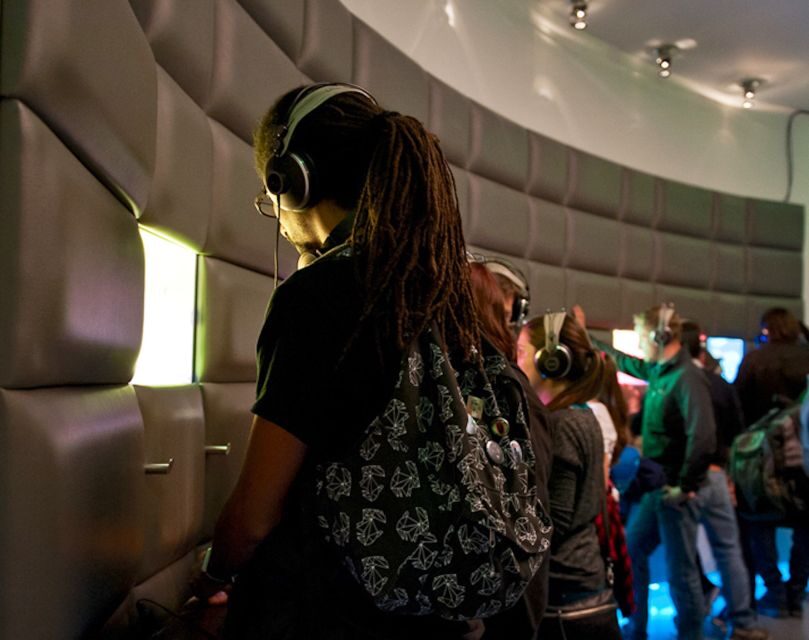
Plan to bring headphones. The museum provides plenty of audio-based moments, and headphones are specifically called out as something you’ll need.
Also bring time for wandering. This isn’t a two-room stop. It’s a four-floor experience with lots of interactive stations. You can rush, but you’ll miss the “try it, then understand it” loop that makes the museum special.
If you get hungry mid-visit, note that food and drinks are not included. The smart move is to eat before you go, or plan a break nearby. That keeps your museum time focused and stops decision fatigue.
If you like to plan: you’ll get a museum map as part of your admission. And if you want narration-style help, you can download the app guide to your smartphone in 8 languages, plus a children’s app in 2 languages.
Value check: is $22 worth it?
At about $22 per person, this is priced like an admission ticket, but it delivers like an activity center. The interactive exhibits—conductor challenge, Namadeus Game, sound science experiments, and the dice-composed waltz—are the kinds of features that make a single ticket feel like multiple stops.
You also get practical add-ons that reduce extra spending: coat check is included, and the smartphone app guide and map are included as well. For families, the “something for every age” feel tends to stretch the value because kids and adults can both participate in meaningful ways.
Is it perfect? No museum is. If you want deep, guided storytelling with a live docent at every turn, you might wish for more narration than the exhibit approach provides. But if you’re the type who learns best by doing and listening, the value lands very well.
Who should book Haus der Musik tickets?
This ticket makes the most sense if you:
- Love classical music but also want a break from being talked at
- Have kids who need hands-on activities to stay engaged
- Like science topics related to sound, hearing, and instruments
- Want an easy Vienna outing that fits into a busy itinerary without committing to a full day-long guided tour
It’s also a good choice if you’re visiting Vienna for the first time and want a cultural experience that feels modern, not dusty.
Should you book this ticket?
Yes, if your ideal museum day includes interactive learning and not just reading. For $22, you get major composer storytelling, hands-on sound experiments, and the Vienna Philharmonic angle in a way that feels made for real people, not museum etiquette robots.
Book it if you’re traveling with mixed interests—someone who wants classical history and someone who wants hands-on fun. Bring headphones, plan your snack timing since food isn’t included, and give yourself enough time to try the games instead of just scanning the displays once.
FAQ
How long is the admission valid?
Your ticket is valid for 1 day, from first activation.
What’s included in the ticket price?
Admission is included, along with an app guide to download on your smartphone (8 languages), a children’s app (2 languages), a museum map, and coat check.
Do I need to bring anything?
Yes. You should bring headphones.
Is Haus der Musik wheelchair accessible?
Yes. There is step-free access at the main and side entrances, automatic sliding doors, wheelchair-accessible elevators, and wheelchair-accessible toilet facilities located in the inner courtyard and on the top floor.
Are food and drinks included?
No. Food and drinks are not included.
Do children get free admission?
Yes. There is free admission for children under age 3.